
For this 15 minute focus, we played with chemical mixtures and reactions. I normally have a 2 hour long class on mixtures and 2 hours on reactions, so this was just distilling down a really brief introduction to this. I also usually do it all with hands-on activities, but in this context, I instead do it as demo where the kids practiced the eyes-only, hands-off skill that I know they will often need in kindergarten. I told them about this before we started and they did a great job! Very engaged, but sat and watched – no hands on.

Supplies I used*
- 2 water bottles, one full, one half full
- a bowl
- marbles (or other small toy)
- salt
- glitter or sequins
- dry tempera paint
- a few ounces of vegetable oil in a water bottle
- food coloring
- alka-seltzer
- vinegar
- baking soda
- cabbage water
- paper towel
First, I told them we were going to try mixing different things together and seeing what happened.
I poured some water from the full bottle into the bowl, then mixed in some marbles. I asked them if they were mixed together or if I could take them apart again – they said I could take the marbles out of the water – I did. I asked if they were changed in any way – they pointed out that they were wet – I dried them, and then asked if they were different than before I put them in the water.
Then I added salt to the water in the bowl. They could see the grains of salt, but then I stirred. Where did the salt go?? We learned the word dissolve.
I added glitter to the water in one of the bottles – does it mix? Nope – it floats. I put on the lid, and shook and shook – it would mix in temporarily (a suspension) but then separate out again as soon as I stopped shaking.
I added dry tempera paint (could also use the food coloring) to that same bottle, and shook it up – it dissolves and mixes in, but the glitter still floats.
I showed them the other water bottle. I explain that the food coloring is colored water – will it mix with the water? I add a few drops – it mixes. Can I take it back out? Nope.
I showed them the bottle of oil. I asked them what will happen if I add the food coloring to the oil. They think it will mix, but it doesn’t! The food coloring just beads up in the oil.
I poured the oil on top of the water/tempera/glitter mix – what happens? The oil floats – it doesn’t mix in. (You can see this mix in the bottle in the back of this picture. (I think the bowl was soapy water and turmeric?)
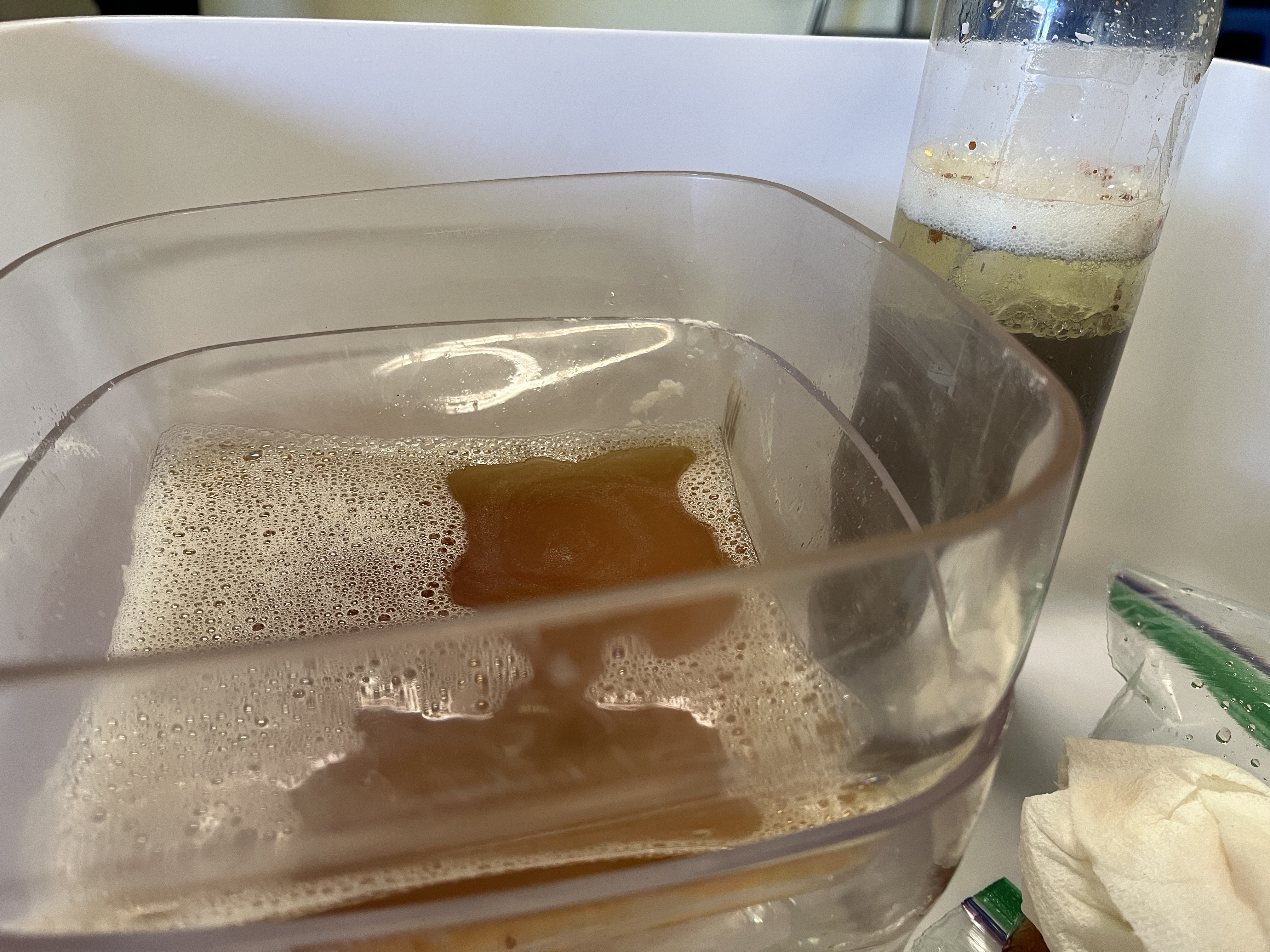
I added an alka-seltzer to the food coloring / water bottle. It makes bubbles / fizzy water!
I added an alka-seltzer to the water/tempera/glitter and oil bottle. “Lava lamp”!
You could easily stop there!
I also did some mixing in the bowl of baking soda and vinegar to see / hear the fizz and talk about reactions.
Note: I had some turmeric which websites claim is an indicator that will turn red if mixed with something base (it stays yellow with acid); however, when I mixed it with both baking soda and with soapy water, nothing happened! If I did it again, I would use cabbage water which is a great indicator.
I thought this would be a super messy experiment, and had plastic tubs there to dump things into if needed, but it didn’t actually make much mess.
* There are lots of other things you could do here – check my sequence of experiments post for more ideas that could be adapted to this setting.
 Inventors of Tomorrow
[…] Chemistry Reactions – mix up lots of fun in a water bottle for a demo […]
LikeLike