
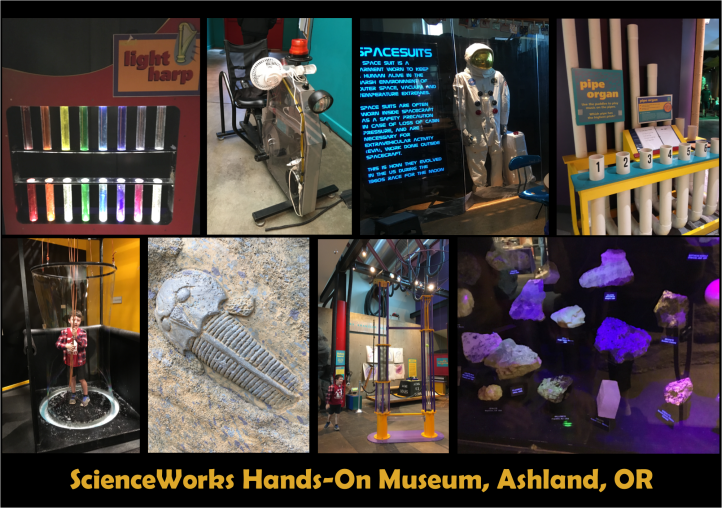
We visited here in 2019 and in 2025. This post is an update from the original, because sadly, some exhibits are no longer there.
ScienceWorks is in Ashland, Oregon (also home to the Oregon Shakespeare Festival and Southern Oregon University). With over 100 exhibits in 26,000 square feet, there’s plenty to see – more than you’d expect for a small town museum!
Their exhibits include: Experiments with Physics and Movement, Exploring Electricity, Optical Illusions, and outdoor exhibits. (This video from 2019 provides an overview of the exhibits but may be outdated.) All of these exhibits are hands-on and very engaging for kids from age 4 – 12. Discovery Island has fun things for the toddlers too.
Click on those links above to see the details about specific areas, or read on for all…
Physics Experiments
There were just a bunch of fun activities that I don’t know how to categorize… they’re all things that move, in some way: one where you pull really hard to lift a heavy ball in the air, then when you let it go, it pushes air through a tube to launch a tennis ball to the ceiling! (My son did this over and over… and over again.) There were water bottle rockets: you fill partway with water, then pump full of air till the pressure builds up, then you release it and they launch up a tube. A giant harmonograph – with a platform that sways back and forth, and a pen on an arm that rocks back and forth, and creates drawings. (This has to be operated by museum staff so isn’t always happening.) A stationary bike that when you ride it. And chairs on pulleys where you pull to lift yourself up high… you have to pull harder on some than others, so you can see the science of pulleys in action.


Electricity
They had a “light harp” where if you passed your hand through the center, between the top and bottom pipe, it would trigger an electric eye and play a musical note, so you could play music on the harp. There was a lightning ball, which kids love, and a “human battery” experiment where you place one hand on aluminum or copper, and one hand on zinc or brass and notice whether electrical current flows.


In 2019, there was a dark room where there were several different light exhibits, including a jacob’s ladder / spark gap, and a “dancing barbies” which had 5 Barbies mounted on a spinning platform – when the strobe flashed, it looked like they were dancing. I can’t remember if this was still there in 2025.
What do you see?
Lots of exhibits related to the sense of sight: a duck-in kaleidoscope where you’re inside the kaleidoscope and can see many reflections of yourself, a microscope, a fly’s eye lens, and a zoetrope.


They also had LOTS of optical illusions. Here are just a few of them. The mirror that reflects half of your body so it looks like a full body is particularly entertaining when you have a very asymmetrical body like I do.


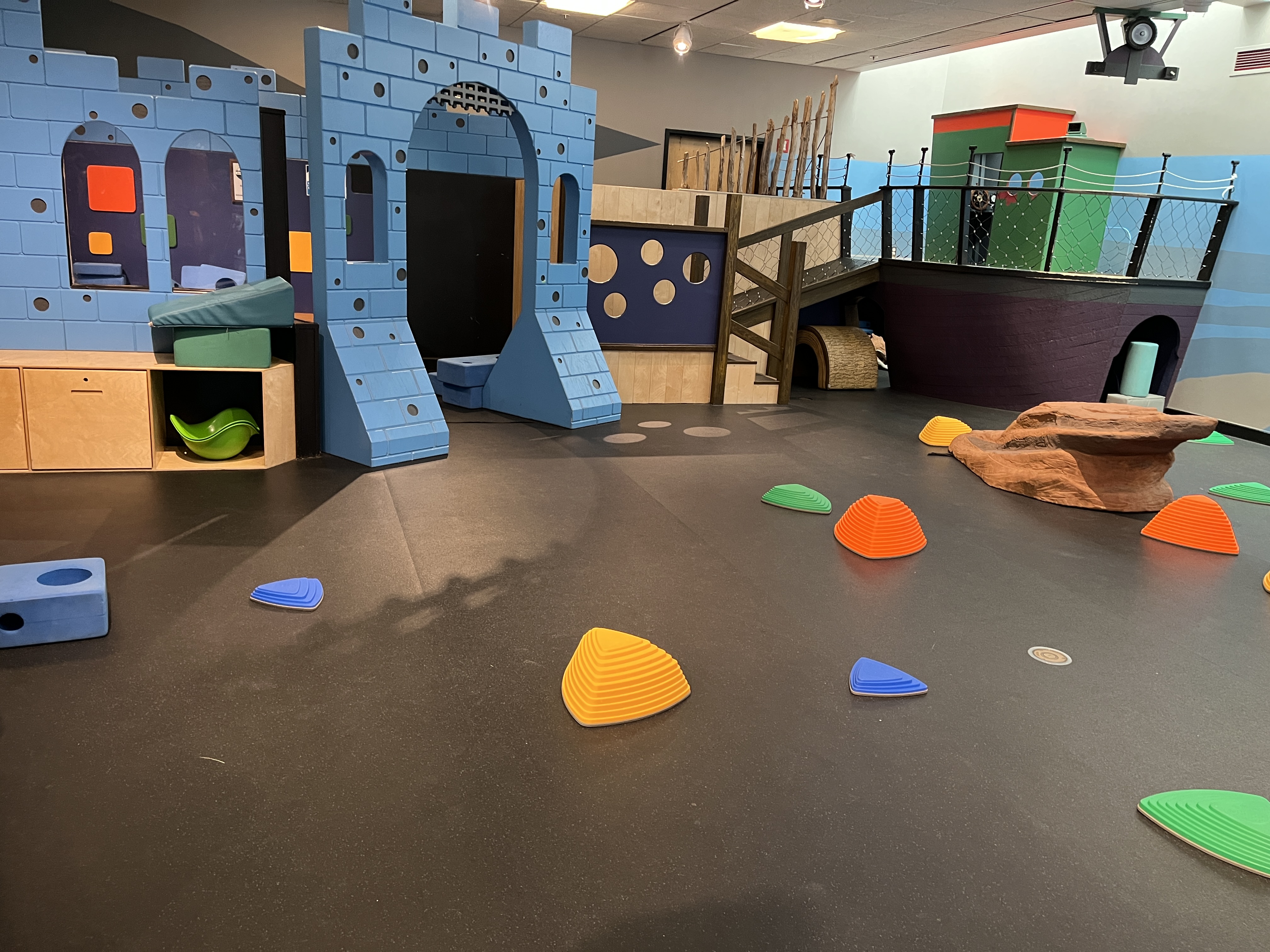
Discovery Island
This is a special area for ages 5 and under.
Outdoor Exhibits
Outside the building, there’s a climbing wall that reflects geological eras, and that also has “fossils” embedded in it for kids to search for. (This exhibit is really cool looking! But… hard to climb. Even for my kid who is pretty good at climbing walls.) And an echo tube where you stand at one end, yell in and listen to the echo.


Space
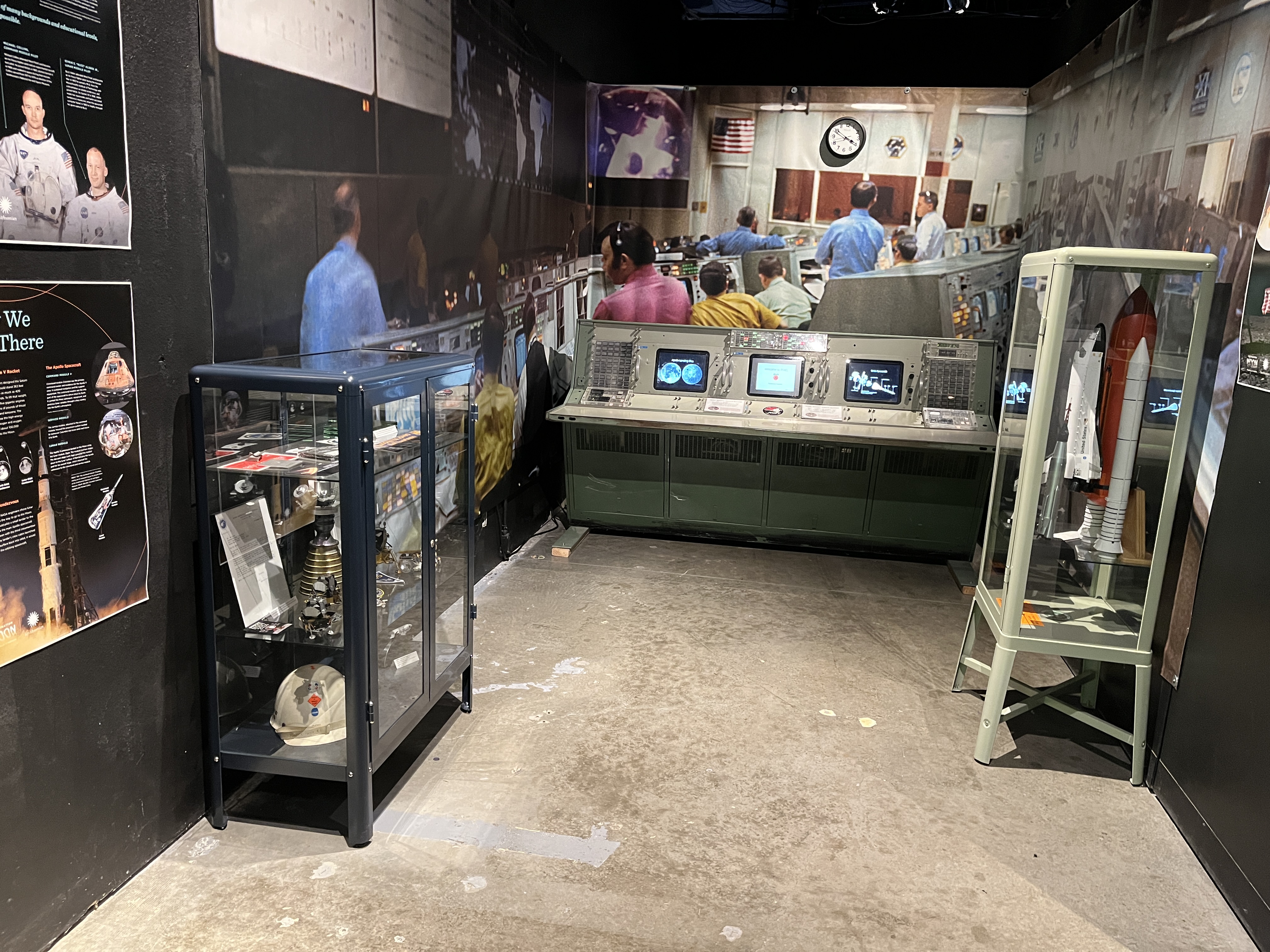
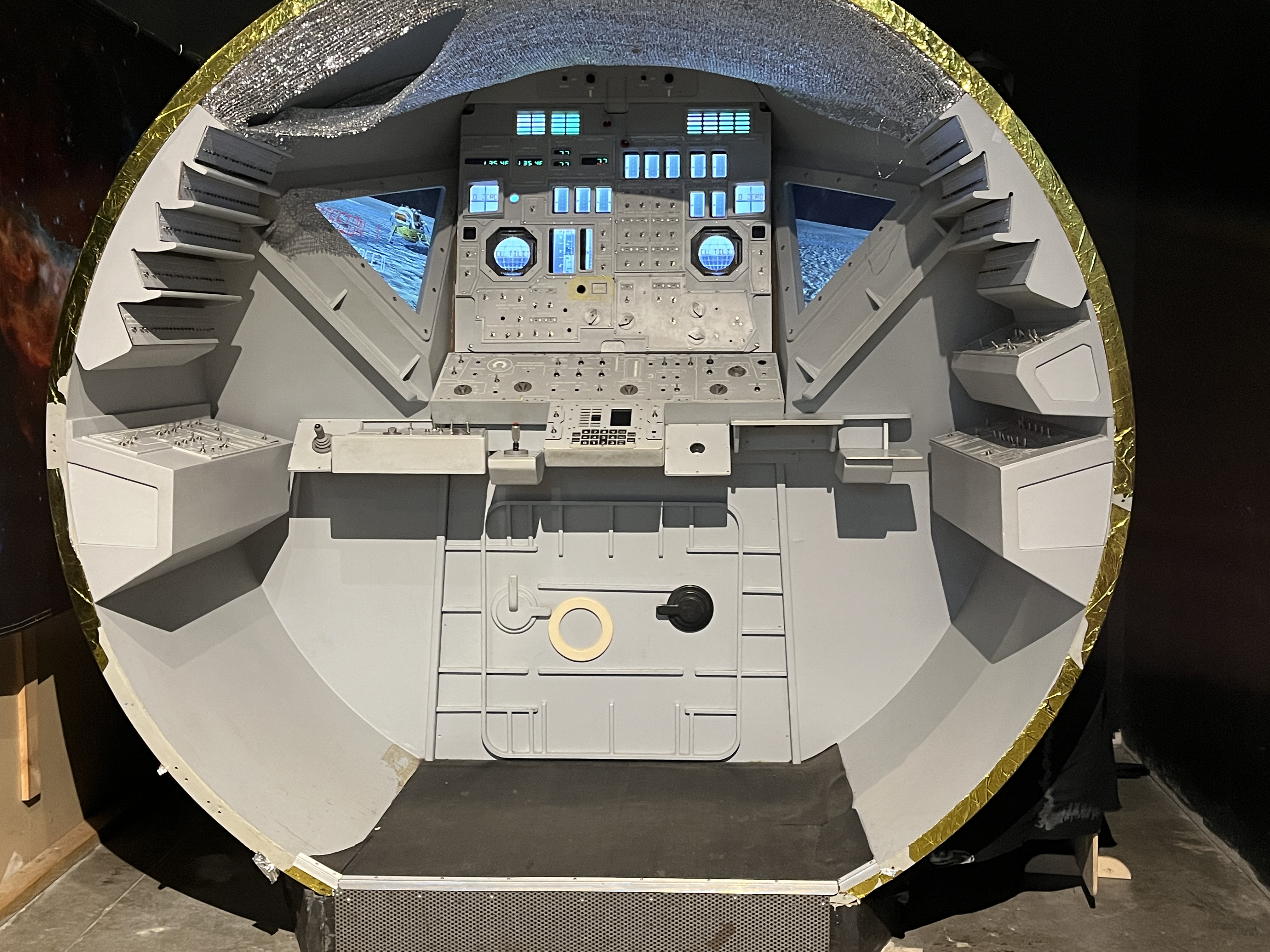
There was a full scale, accurate, lunar lander replica with LOTS of switches to flip and dials to turn. The flight simulator that allows you to practice a lunar landing wasn’t working.
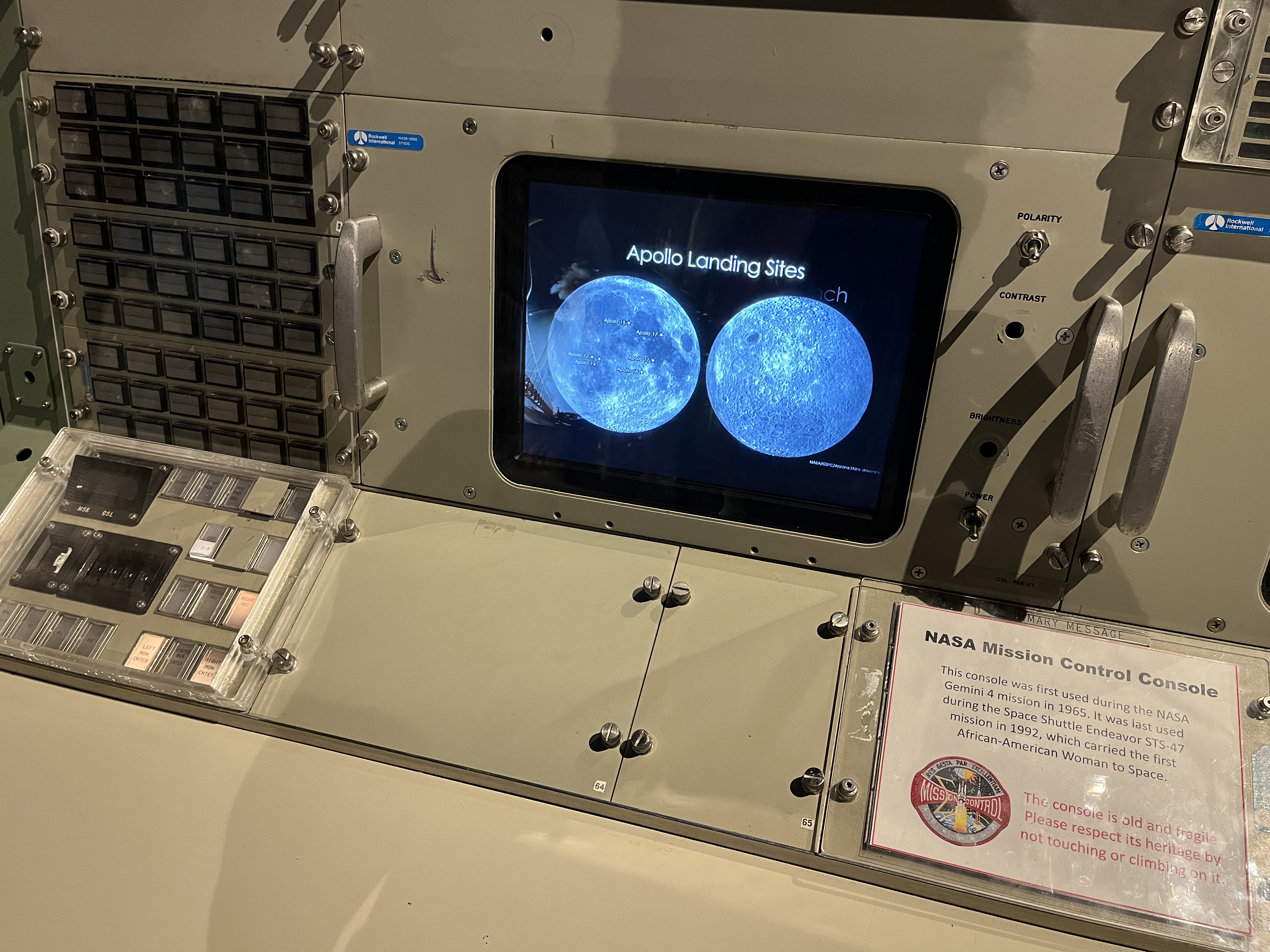
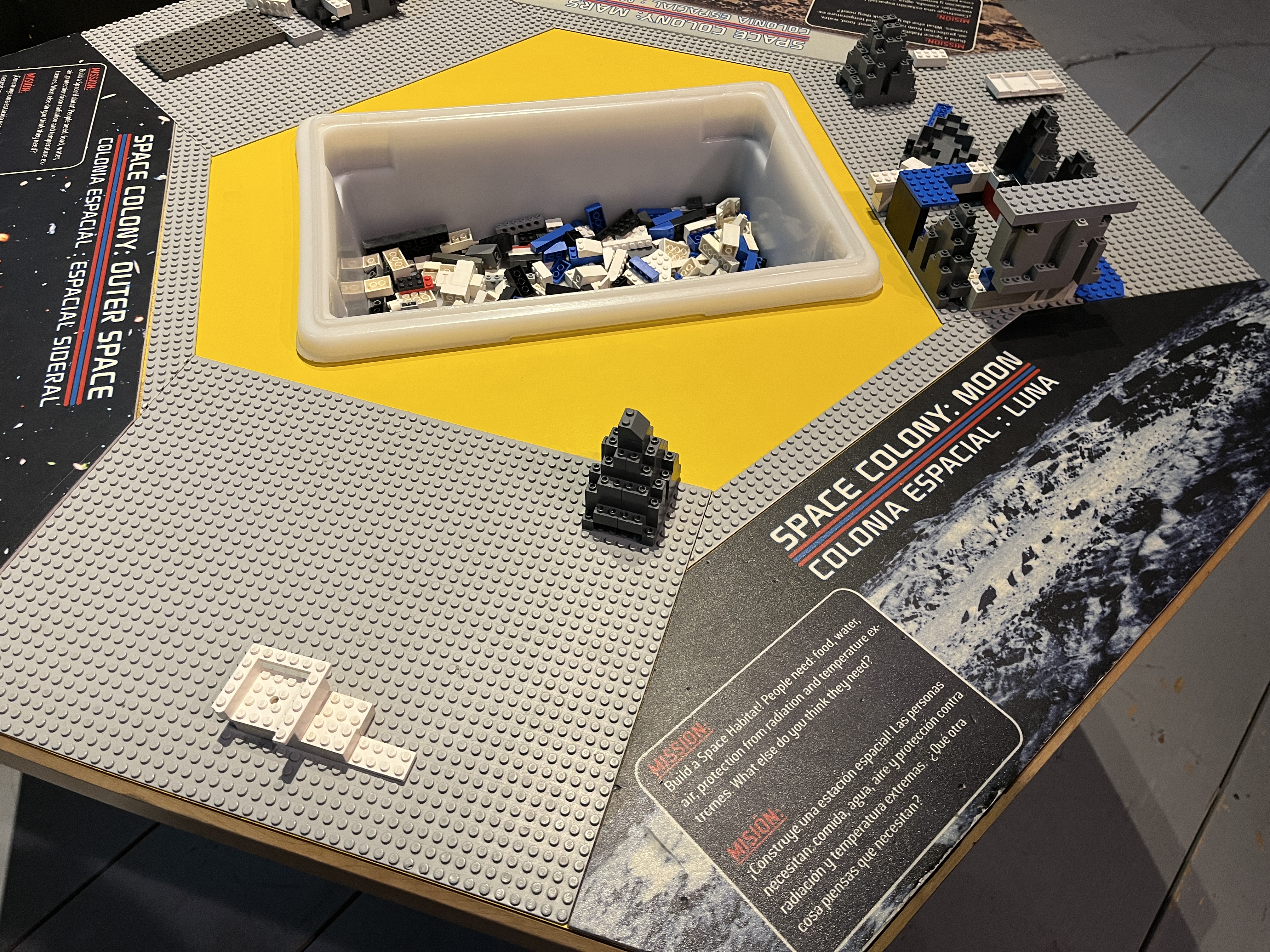
They have Apollo-era mission control console, first used during Gemini 4 in the 1960’s, but you’re not supposed to touch it. And space Legos.
Music
They have a “Noise!” exhibit: the pipe organ, musical wrench xylophone, and string strobe. We’ve seen things like the pipe organ in many museums, but love that this one had a song book with it so you could choose a tune to play.
There was also a “Jamming Room” – a soundproof studio. You can lay down a beat, add tracks with animal sounds, and finish with your own voice or instrumental playing.


Building Room
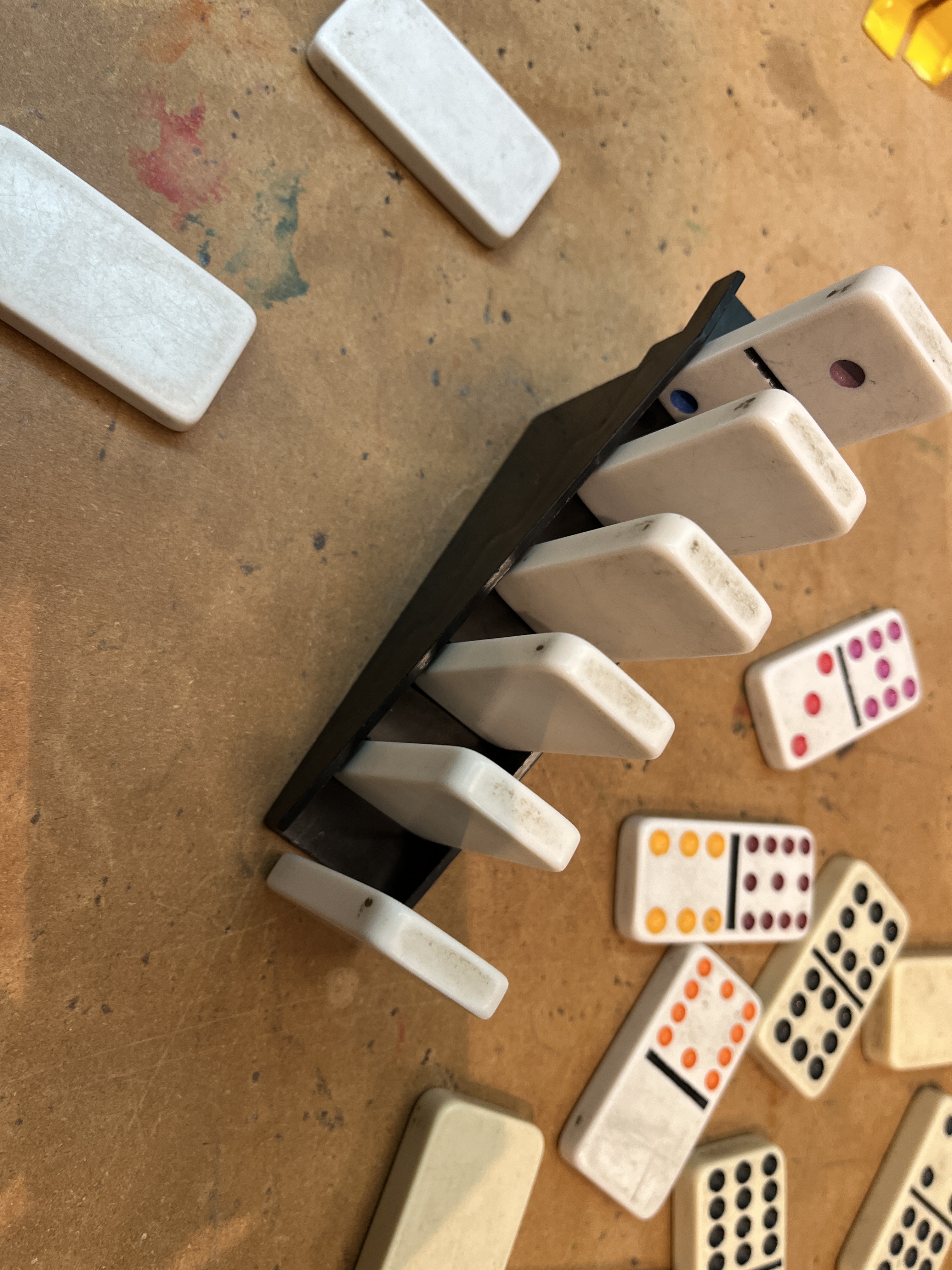
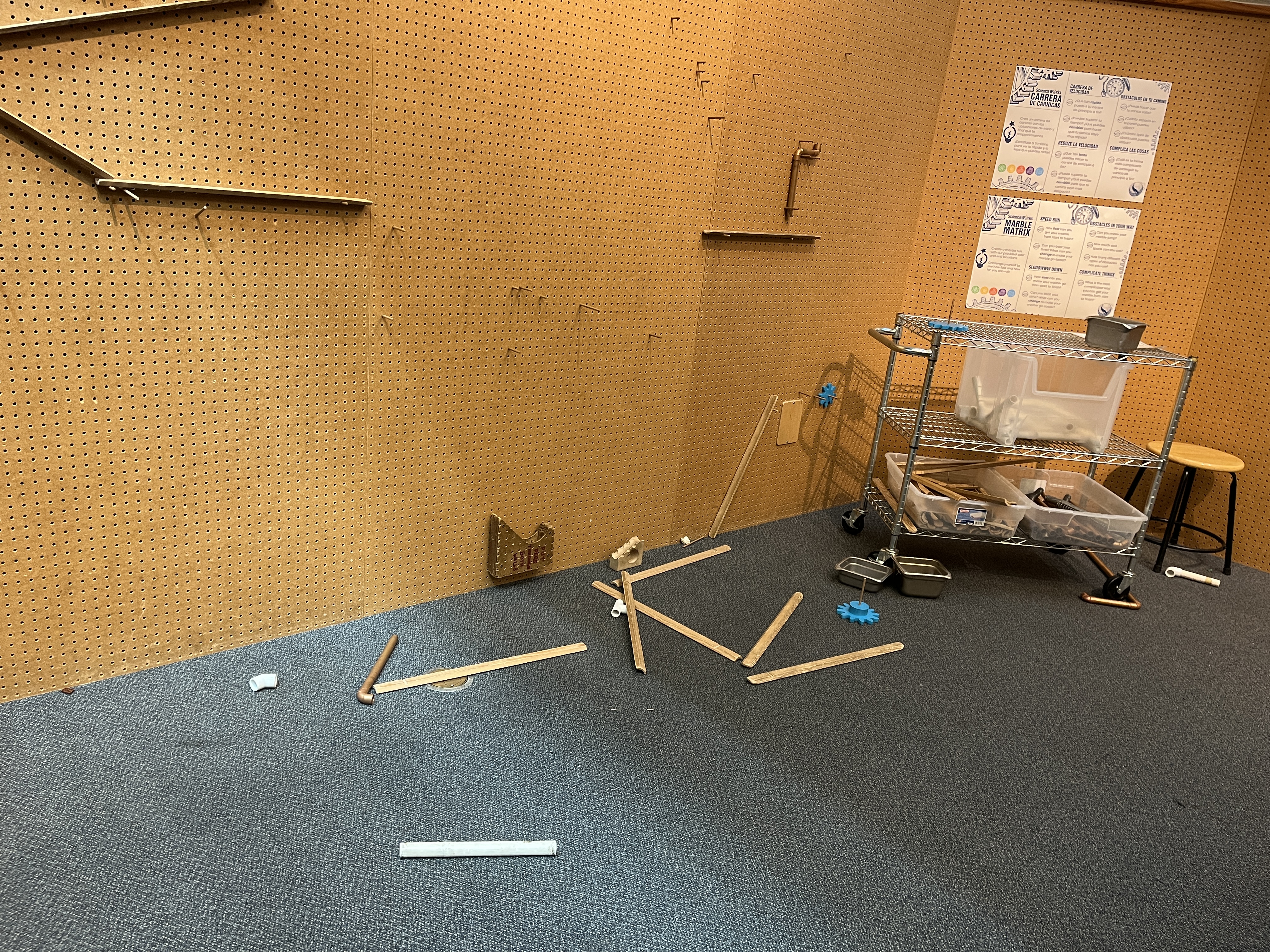
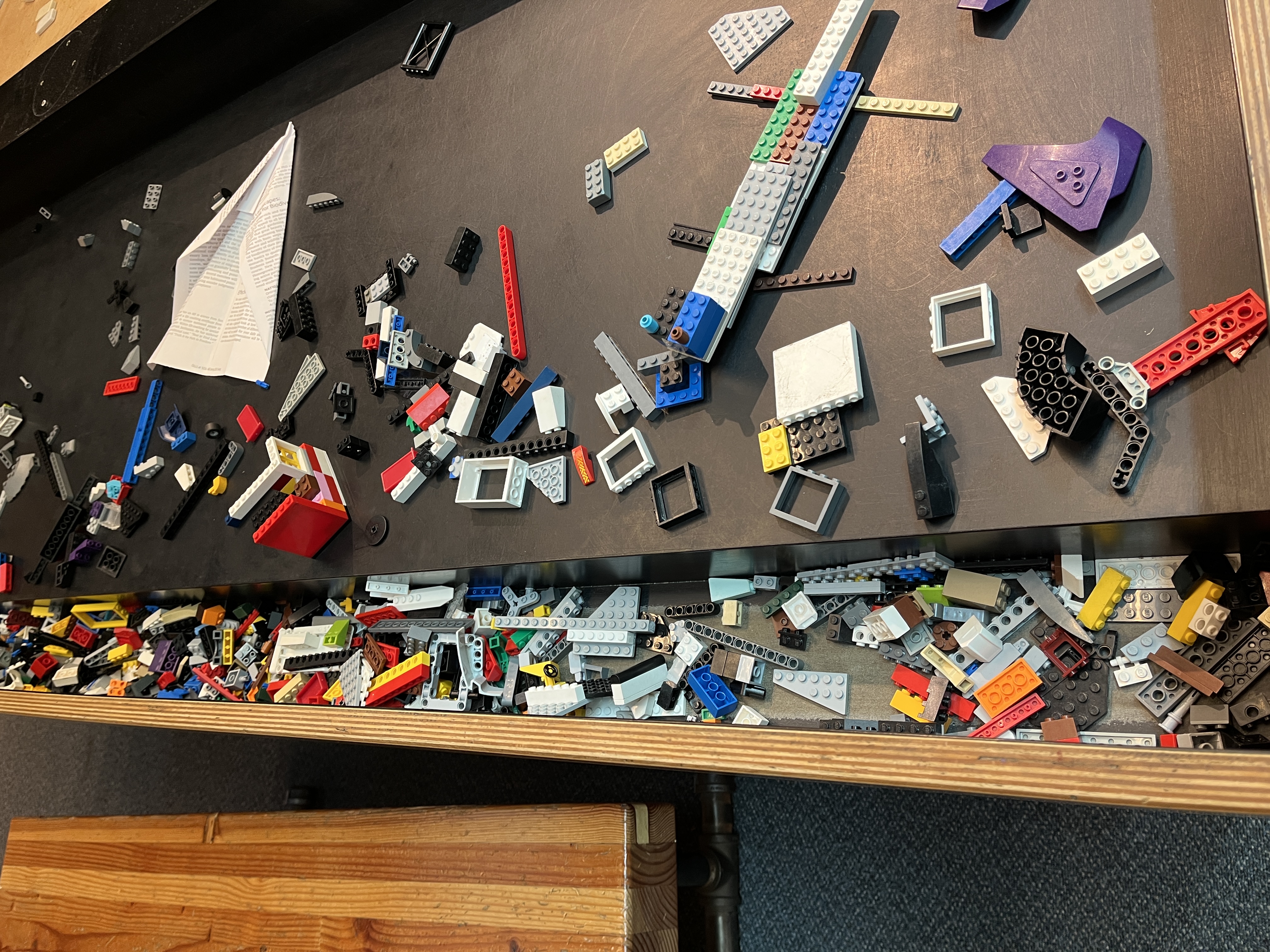
They had a room with lots of K’nex blocks, dominos to build domino chains with (unfortunately, there were several slightly different sizes of dominoes and that made it hard to build effective chains), Legos, a wind tube, and a ball run.
Special Exhibit
When we were there in August 2025, they had a special exhibit called PaleoArt.

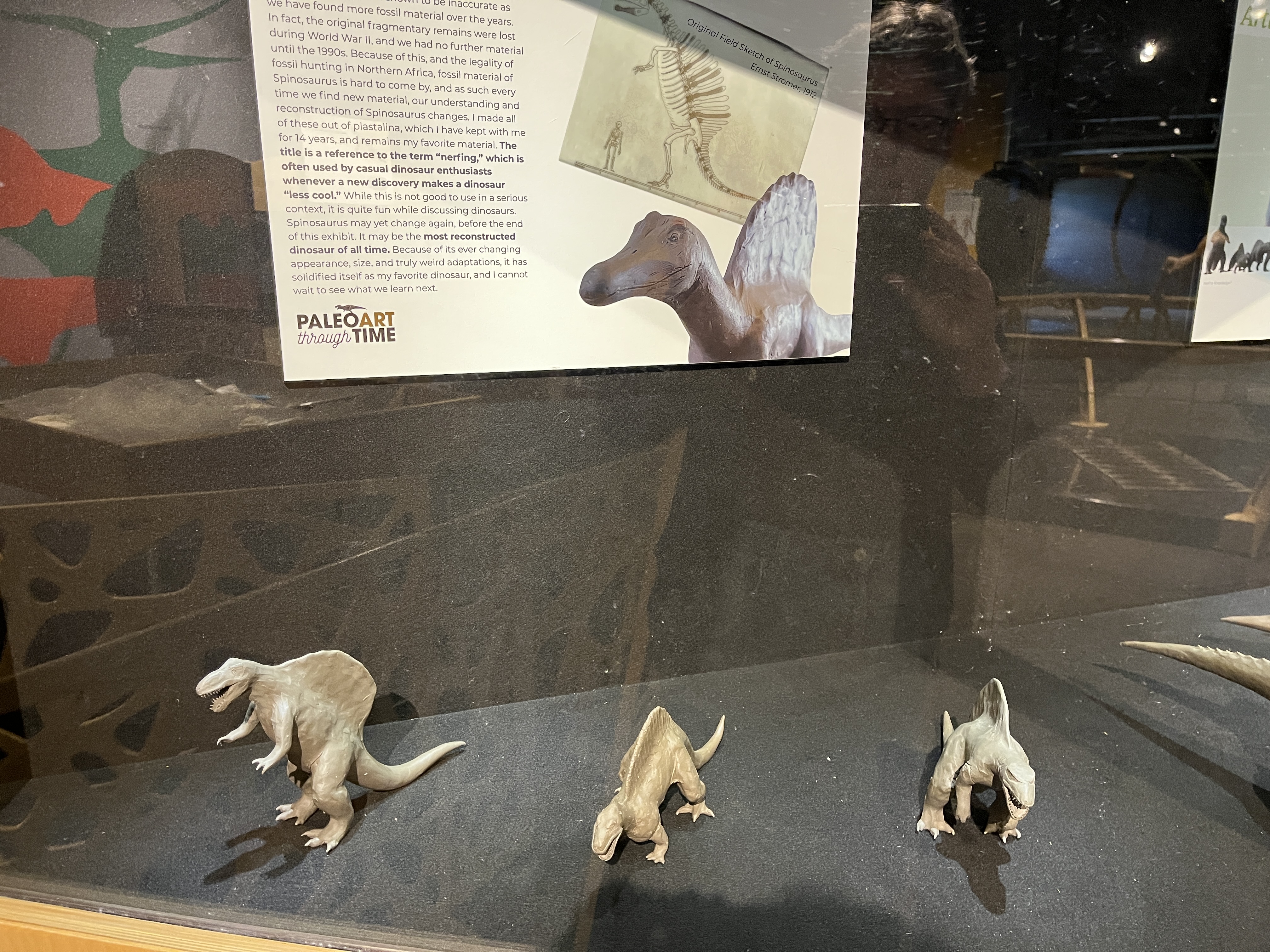
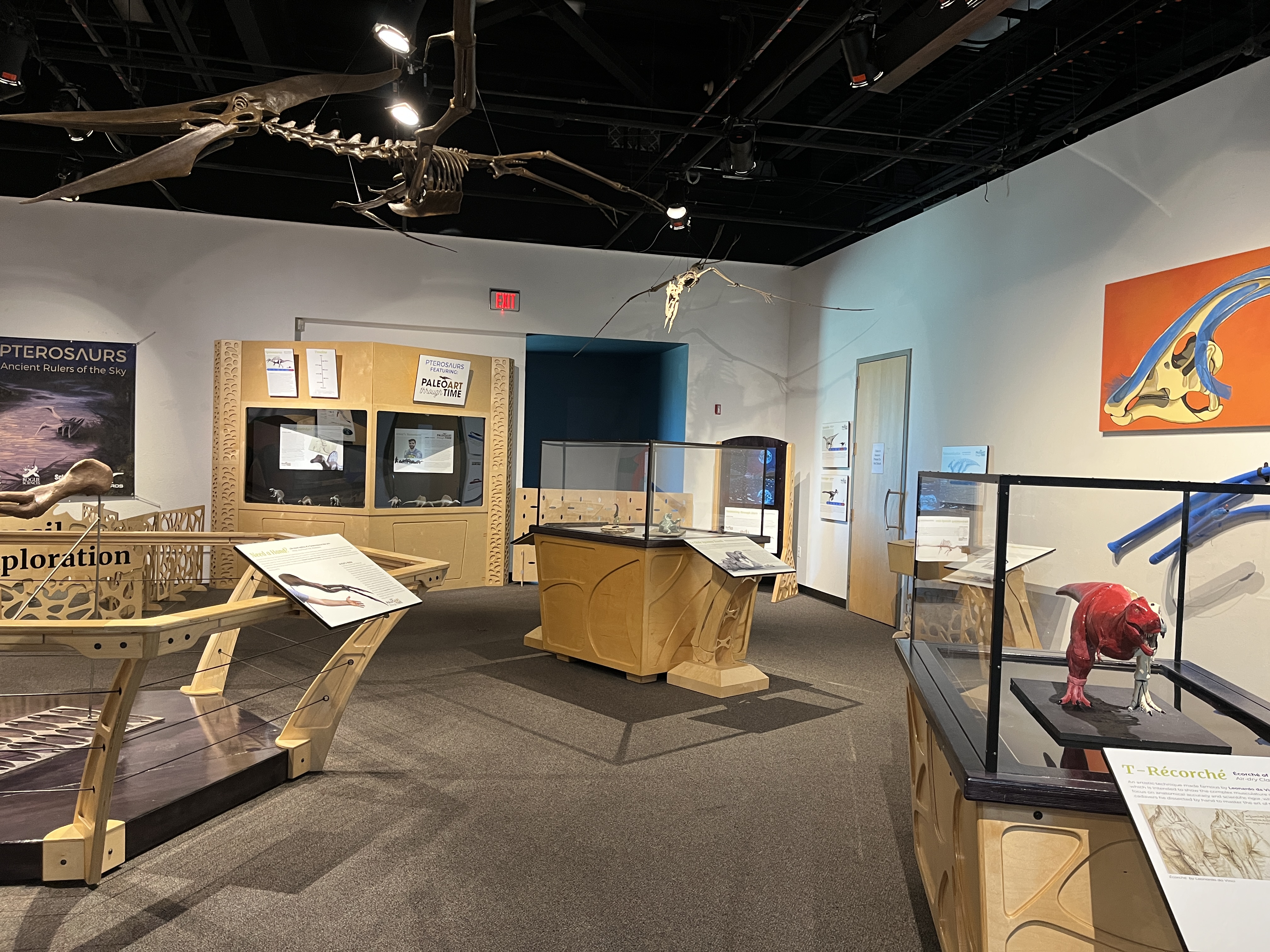
In October 2025, this will be replaced with Subterranean Science: Exploring Life in the Dark.
Logistics
Admission in August 2025 was $10.50 for kids 2 – 12, $12.50 for teens and adults, and $10.50 for seniors 65+. (A few reviewers found this too high, but since it’s the price of a movie, it feels really reasonable to me!) It’s $3 for SNAP card holders. (They also participate in the ASTC passport program, so if you’re a member of your local science museum you may get in for free.) For current details, check the museum website.
They had picnic tables outside the front door if you brought your own food.
We were there on a Thursday in August, and there were plenty of people, but it was never crowded, and we never had to wait for anything. You could see most of the museum in 60 – 90 minutes, or could stay up to two hours. (Another fun activity in downtown Ashland is a game store called FunAgain, where they have a huge library of board games that you can play on tables in the back of the store. They just ask that you spend at least $2.00 per person in the store, which we happily did with some sodas, chips and a mead.
More STEM Destinations
We visited ScienceWorks as part of our “Road Trip of Science.” You can learn more about other science and engineering related museums we’ve visited in the Destinations section of this blog.
 Inventors of Tomorrow