Back in 2015, I invented a class called Family Inventors’ Lab. Last spring, we completed our tenth full year of the program. This fall, unfortunately, the college that sponsored us cut the program. We may meet again in some other time and place in the future. But for now, I wanted to take a moment to celebrate the class. You can learn more about the class at the bottom of the post, but first, let’s touch on 34 favorite activities – one activity from each week of the curriculum.
Fall Quarter – Engineering
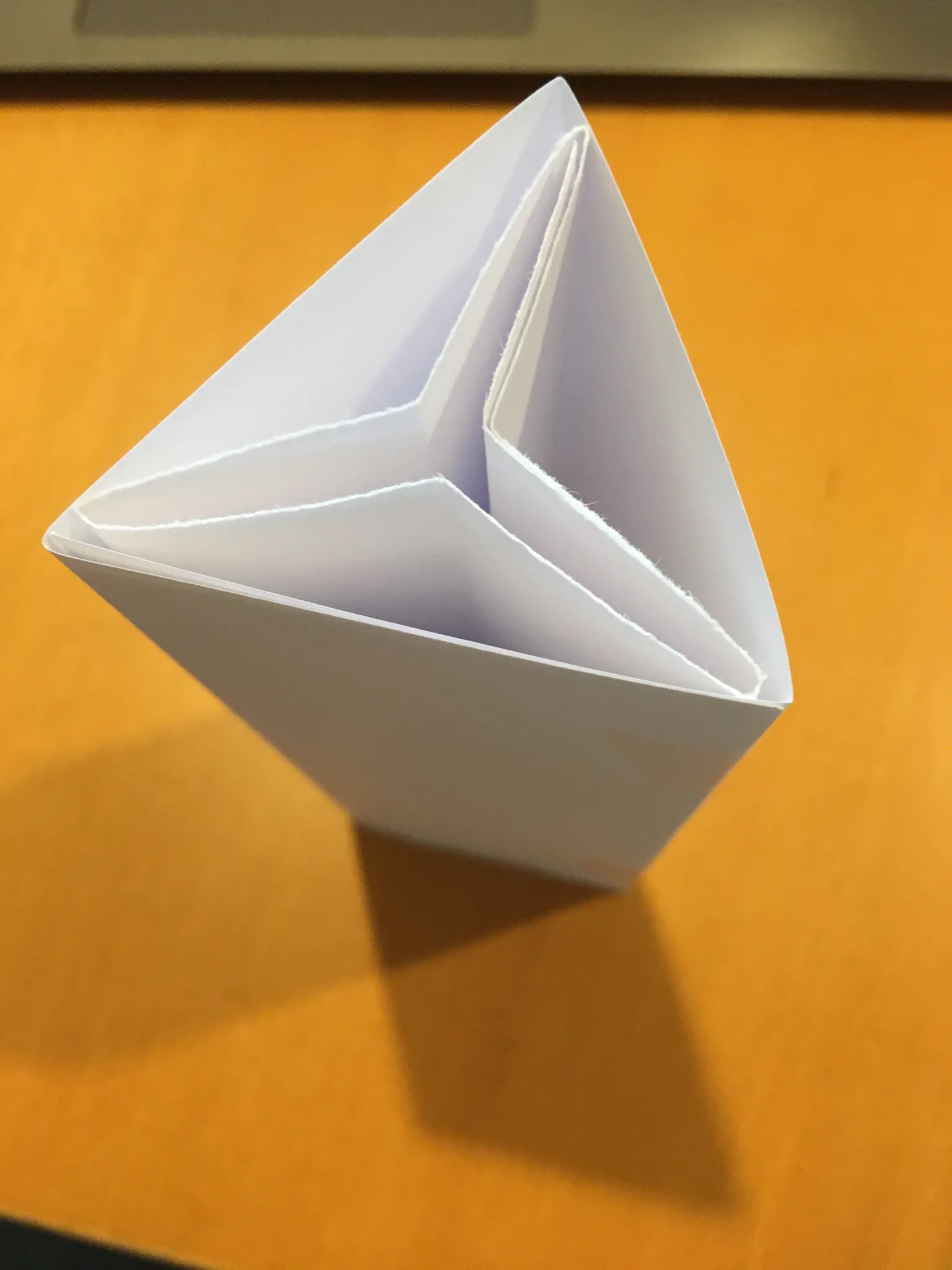
What is An Engineer – the challenge of the week is to build several different ways to launch a pompom into the air. My husband came up with the “pompom plunger” a way to turn one piece of paper into a fun launcher – this is something you can do to create a fun activity with your kid anywhere you find yourself with a little time to kill.
Wind and Flight – This class is built around some really cool equipment – Air Toobz and a scarf cannon / ball cannon that I designed, and the wind tube – a fan with a clear tube above it that you can use to make anything lightweight fly up in the air.
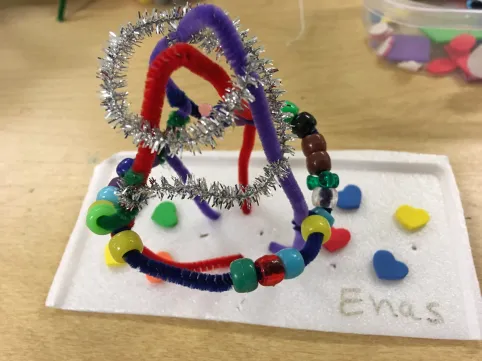
Towers – this week is all about building tall buildings (from lots of different materials) and then knocking them down! It is the perfect expression of how to teach engineering to a three year old! We also do an art project that week that I love – we create Watts Towers – and read a story of their inspiration – a folk art monument in California, built from discarded scraps by an immigrant.
Strong Structures – after we learned how to build tall, this week we work on building strong and stable. To understand the word stable, we have them balance on one foot and see how unstable (aka wibbly-wobbly) they are, then stand with two feet close together, then two feet far apart. We experiment with all sorts of builds to explore it more, and we end class with this great demo to see: how many books can you stack on ONE piece of cardstock if it’s the strongest shape – we’ve gotten as high as 47 books!
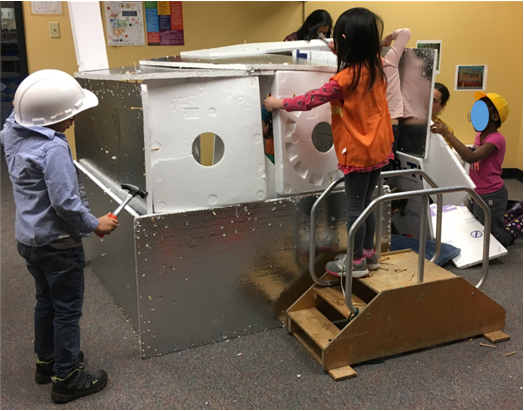
If I Built a House. The theme name is taken from the book we read, one of our favorites! And the marquee activity is one of the activities that inspired me to create this class back in 2015. I went to a birthday party where the kids built houses with styrofoam insulation panels, golf tees and hammers and it was fabulous. It’s the best sound of the year, as all through the classroom, you hear the sound of hammers going tap tap tap and kids working together to make their vision real.
Force – the basic kindergarten science of push and pull. One favorite experiment is rolling balls around a track (or could do with trains on a train track) and crashing them into each other and noticing how they transfer some of the force. We make a “peekaboo puppet” that you pull down to hide and push up to reveal.

Simple Machines – Pulley and Inclined Plane. We set up a climber with a slide (an inclined plane) and then run LOTS of different pulley systems around the room for them to explore. (It’s hard to get a good picture of ropes and pulleys, but it is a pretty fabulous experience!) The next week we go to a playground and run pulleys from a high platform by a tall screw-shaped slide.

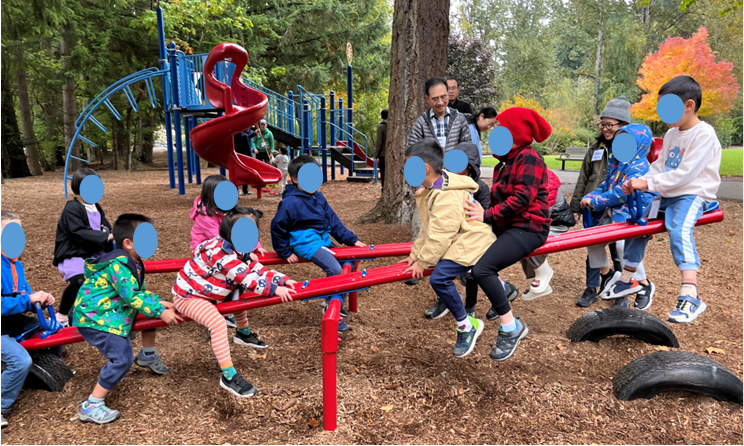
Simple Machine – Wedge and Lever. For wedges, we do scissor practice, and we use lots of cutting tools with the playdough (wooden knives, plastic knives, pizza cutters), and drive gold tees (wedges) into a pumpkin with a toy hammer (lever). The most joyous experiment in this class is the seesaw on the playground! We play with things like: can one kid lift a grown-up? Not if they are both on the ends of the bar, but if we move one partway toward the fulcrum, it works! How many kids can we fit on two seesaws at once?
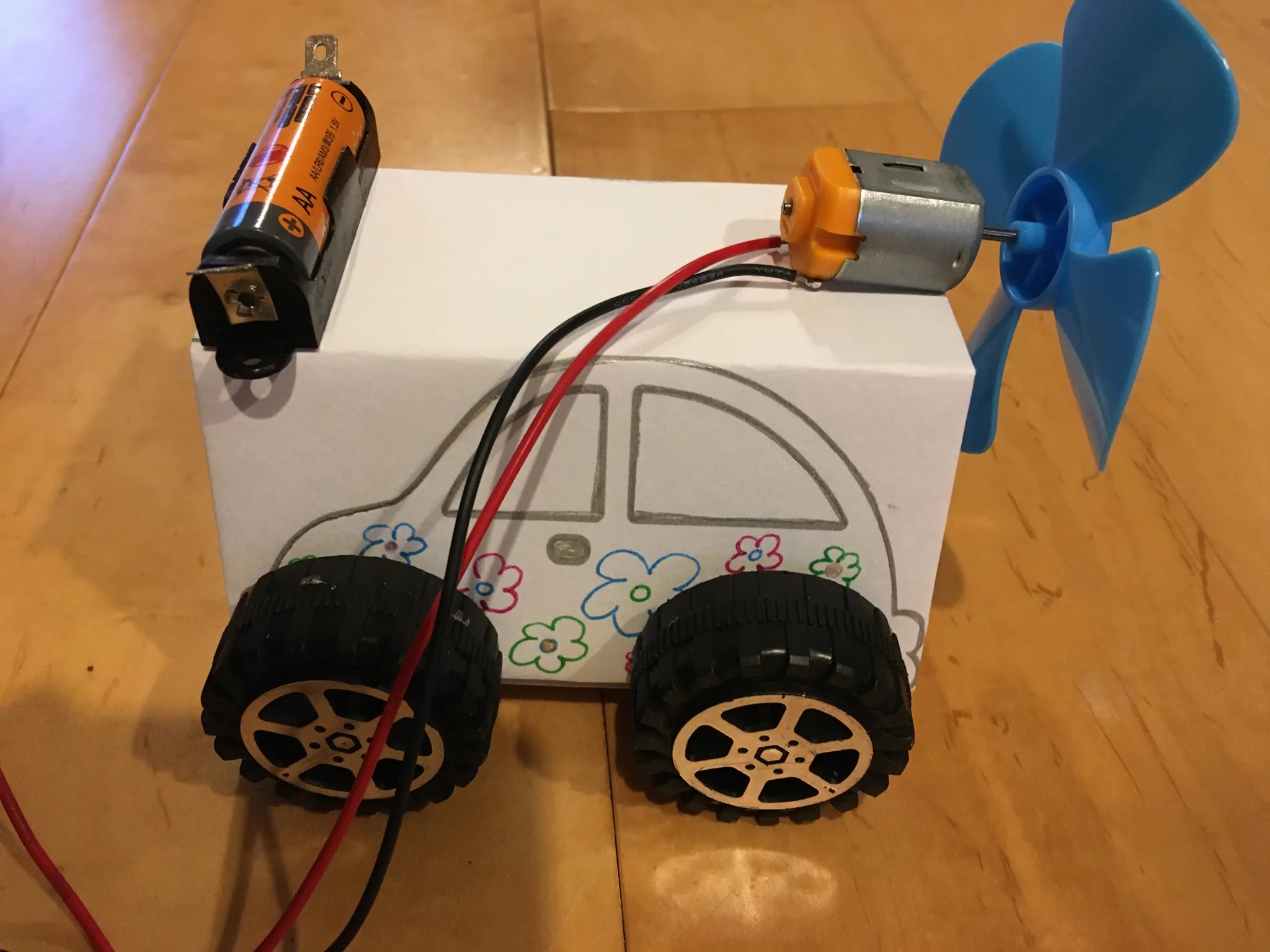
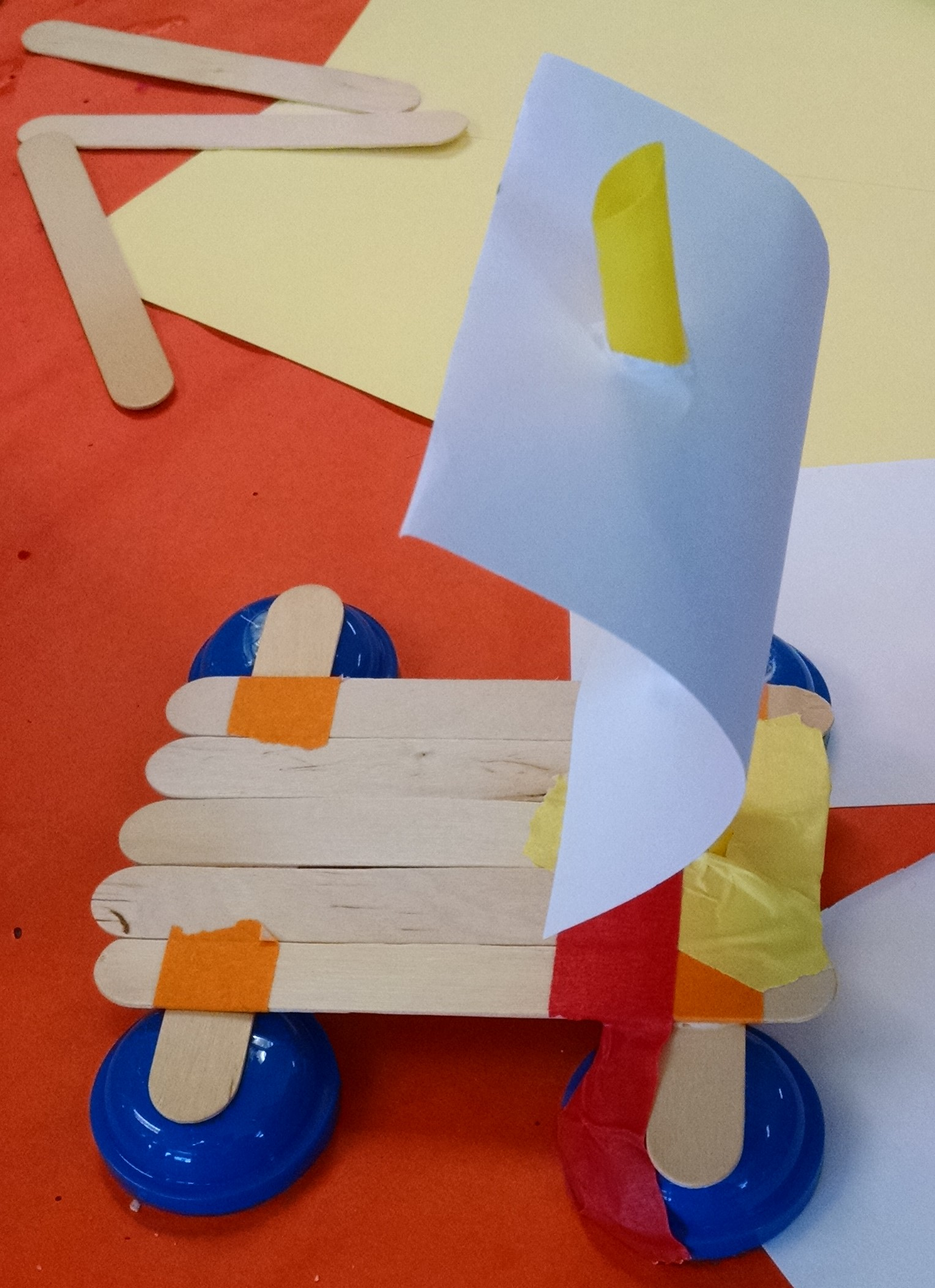
Simple Machines – Wheel & Axle and Screw. My husband designed this great little car that you can make with a piece of folded cardstock, and some wheel and axles. That is a cool enough project on its own. But then we add a battery pack and motor and a propeller fan and it’s a great little motorized car.
Tinkering and Tweaking. This is the theme we’ve tweaked the most through the years – we’ve tried focusing on Rube Goldbergs, but building a multi-step chain reaction is beyond the skills and persistence of this age group; we’ve tried just doing separate chain reactions, and making crazy contraptions. We now have a collection of activities that play with the idea of what is it like to build something, test it, then adjust it just slightly to make it work better. We bring back the motor from the previous week, and make scribble-bots.
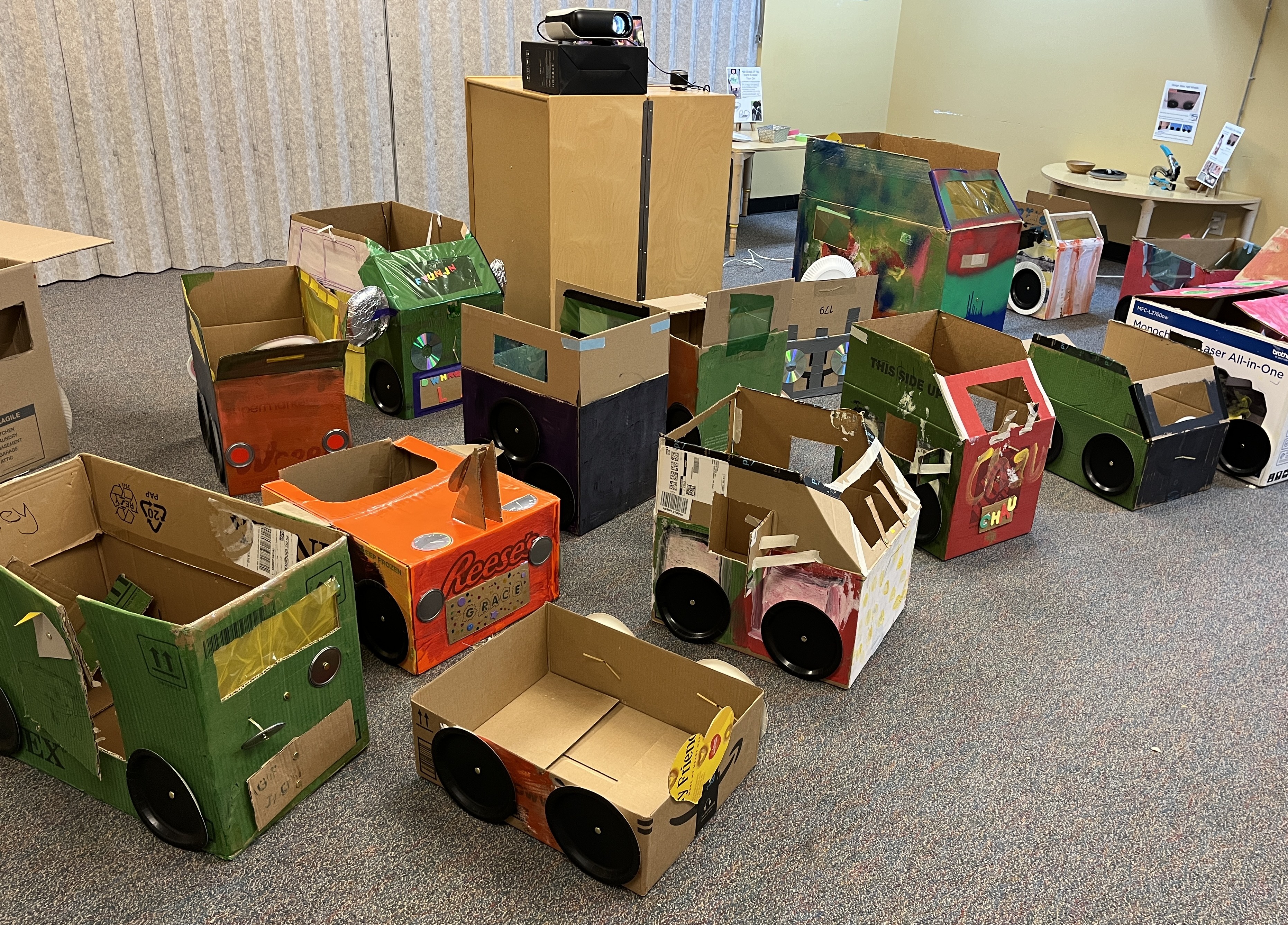
Complex Machine: Cars. For our last class of fall quarter, we learn about how putting several simple machines together in a designed structure can create a complex machine. We turn big cardboard boxes into cars and then we pull them all up for a “drive-in movie.” I love how much these have evolved over the years! Each year, I take pictures of all the cool innovations people come up with, and then share them as inspirations the next year, so families keep on taking things to new levels.
Winter Quarter – Science
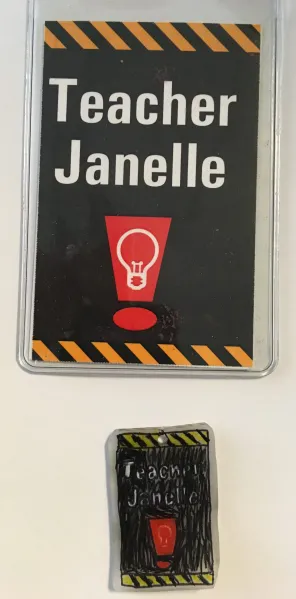
What is a Scientist? We learn about and use lots of science tools this week: microscopes, magnifying glasses, beakers, test tubes, pipettes, thermometers, scales, lab coats and safety goggles. Our take home activity is a classic: Shrinky Dinks. (You draw on a plastic sheet, then put it in an oven to shrink it.) I share with them a shrinky dink that my mom made in 1972 where she took my kindergarten school picture and traced it and shrank it down – it’s fun for the kids to see what I looked like when I was their age.
Geology – Earth and Earthquakes. My co-teacher, Cymbric, made a earthquake simulator. There are two boards, with big dowels between them and bungees holding them together. (We have smaller versions for building structures on and then knocking them down.) It’s a fun thing to play on and also a good way to give a little bit of an idea of what an earthquake would feel like – we do earthquake drills this week too.
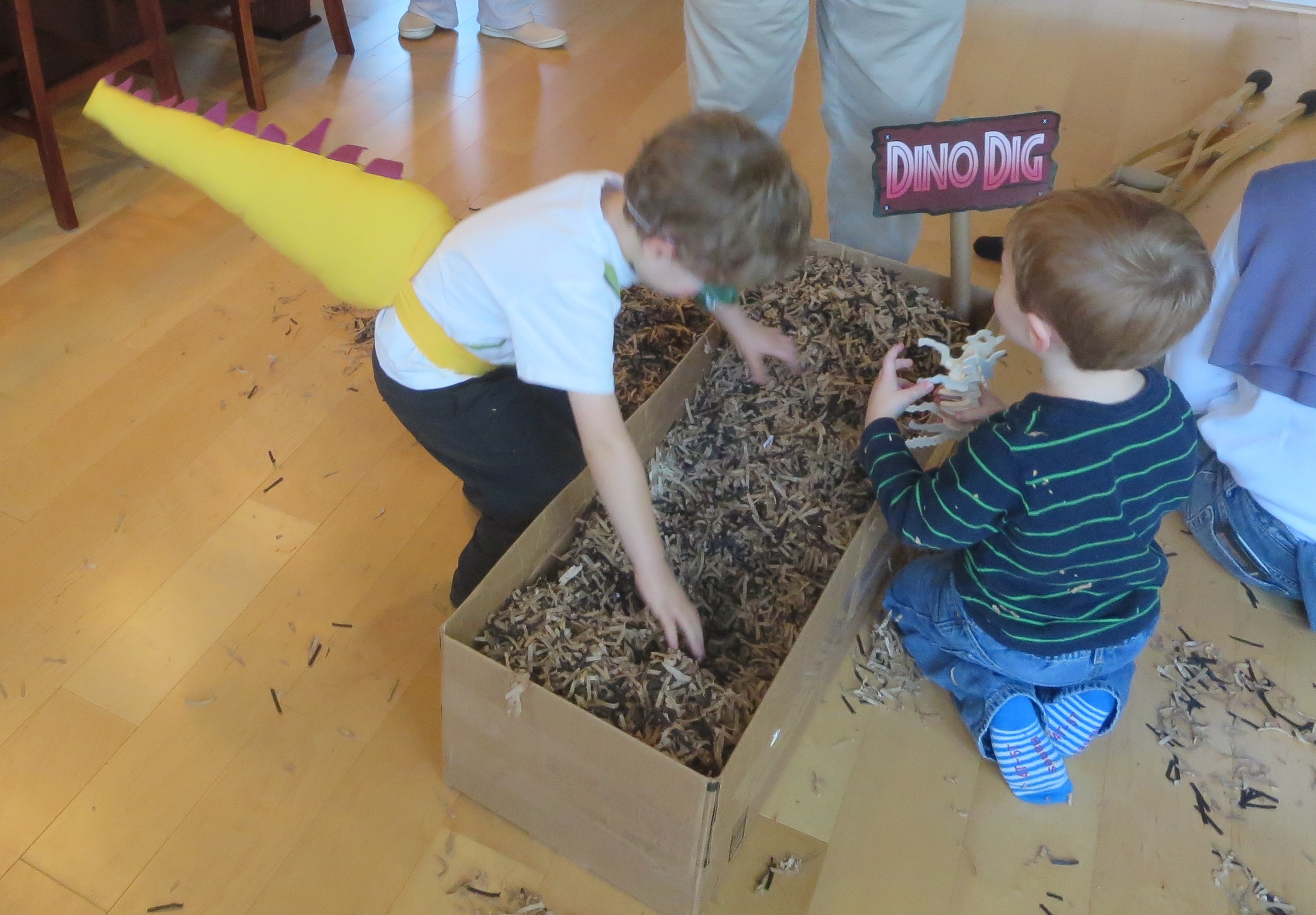
Dinosaurs. What would a kids’ science class be without dinosaurs? My favorite activity is one my sister-in-law found when she was planning a birthday party for my youngest child. It’s the Dino Dig – fill a big bin with shredded paper and plastic dinos. The kids dig through trying to find them all. (Important tip: before they start playing, demo how the goal is to keep all the shredded paper in the bin!! Otherwise, they’ll start strewing it all over the room.
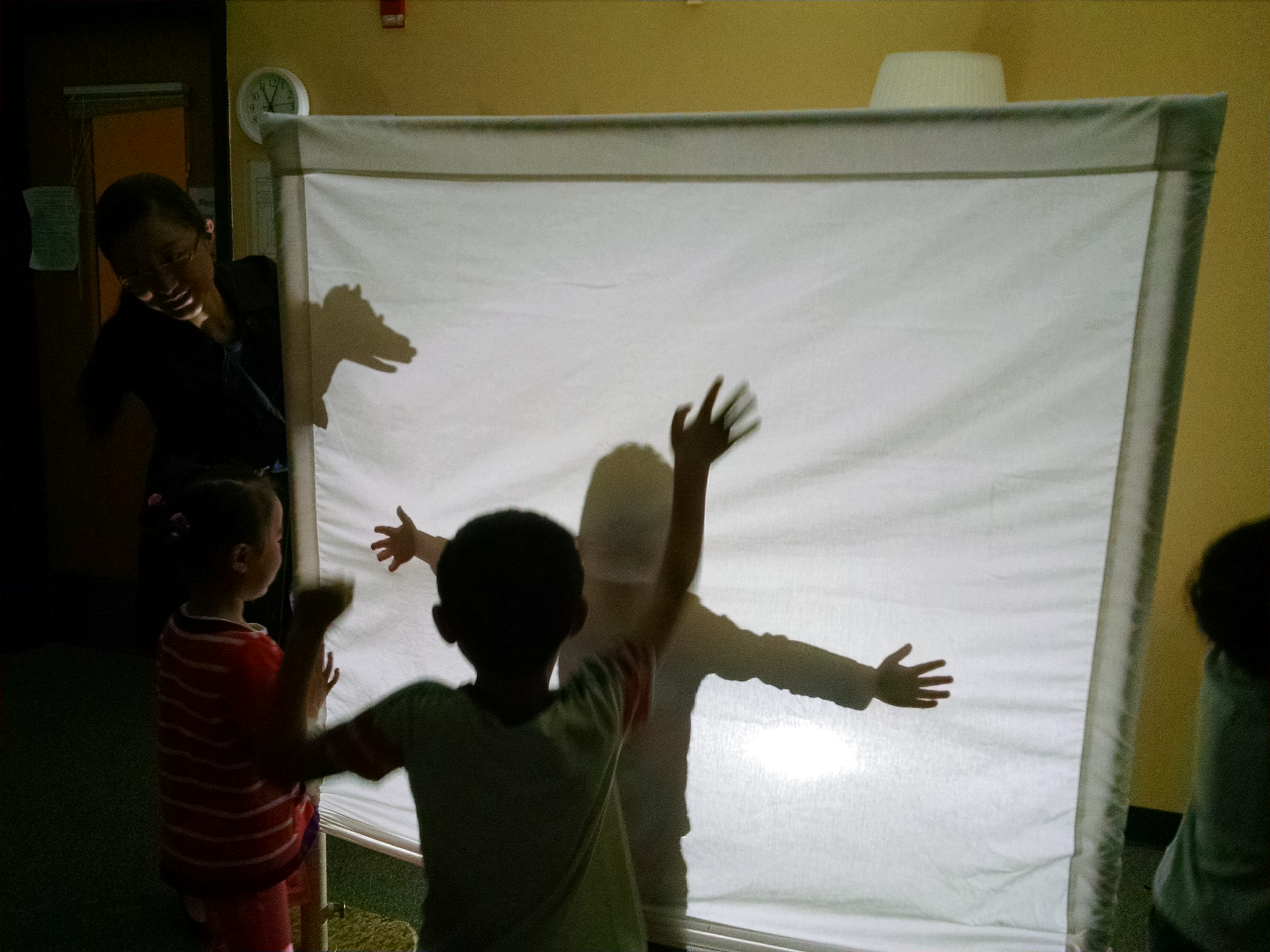
Light and Shadow. This is one of the classes that I have written a book for, because I couldn’t find one that taught the ideas I wanted to cover at a developmentally appropriate level. My co-teacher, Cymbric, built a “shadow screen” with PVC pipe, umbrella stands and a sheet, and we put it in a dark room, put a shop light behind it, and the kids do shadow dances, learn how to make shadow animals with their hands, and test out the shadow puppet craft they made.
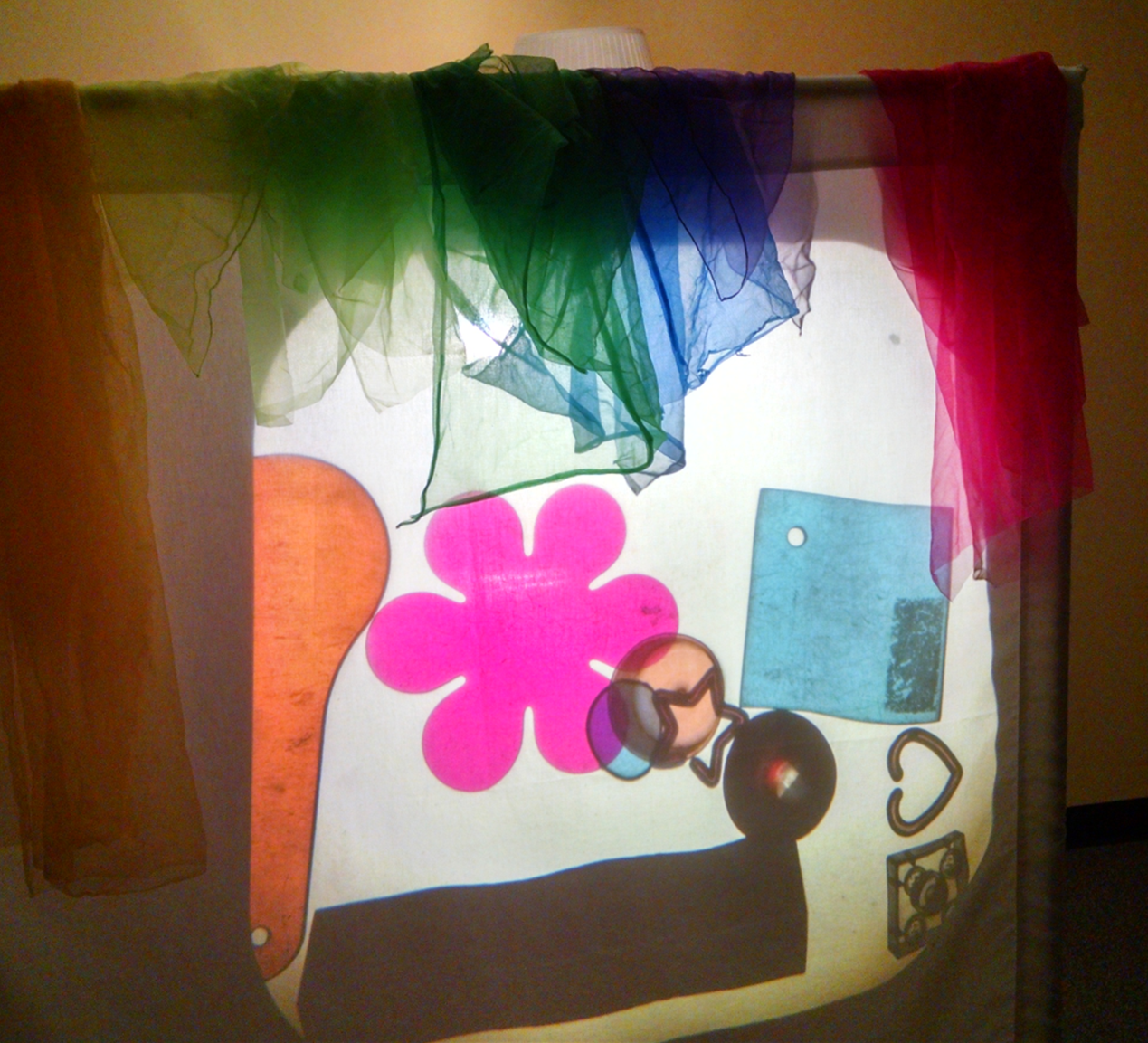
Rainbows. We study the science of rainbows, learn about color mixing and the order of colors in the rainbow. We mix playdough, we mix paint, we mix colored water, and so on. This is one of those examples of how when we have 15 activities all tied into one concept, the kids really grasp the idea by the end of class. One fun activity – we have an old style overhead projector – we put it behind the shadow screen, and children put a variety of colorful translucent items on there, and transparent and opaque objects to see what lets the light shine through.
Invisible Forces. We study electricity, magnetism and gravity all in one week. (We used to divide them up into three different sessions, but then we kept adding new weekly themes, so these combined.) We make a marble maze with a cardboard lid, craft sticks and a glue gun. This is a great experiment in tinkering – you place one stick – test it, place the next stick, test it, and so on, ensuring that you’ve got a workable path from start to finish.
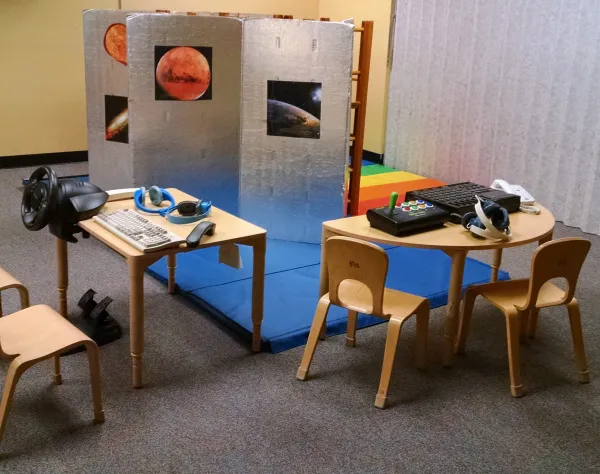
Planets and Space Travel. We learn about the solar system, and about astronauts. We make melted crayon planets, and paper rockets you can launch by blowing through a straw. We have an amazing pretend play activity with a climber rocket ship, and mission control – tables filled with obsolete technology, like joysticks and keyboards and corded phones. Plus astronaut helmets and walkie talkies.
Stars and Constellations. We learn about the science of the stars, and also about the ancient tales of the constellations. We use toilet paper tubes to create constellation viewers, and end with doing a little play about Perseus and Andromeda. Usually we have the kids act it out, but one year, my co-teacher Monisha, did a shadow puppet play.
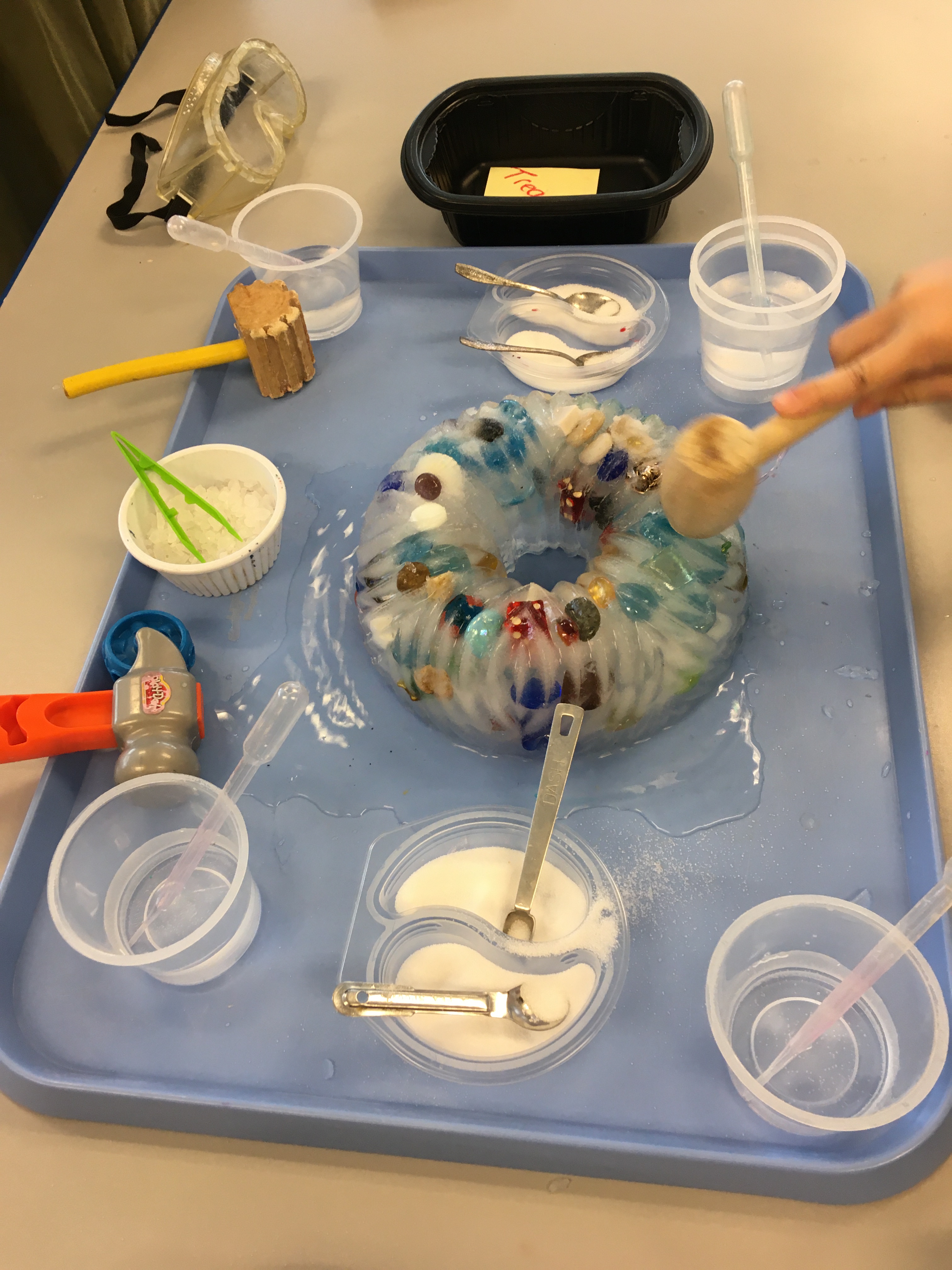
Chemistry – States of Matter. What more classic experiment for this theme than freezing “treasures” in a block of ice, and havint the kids use water and salt to melt the ice?
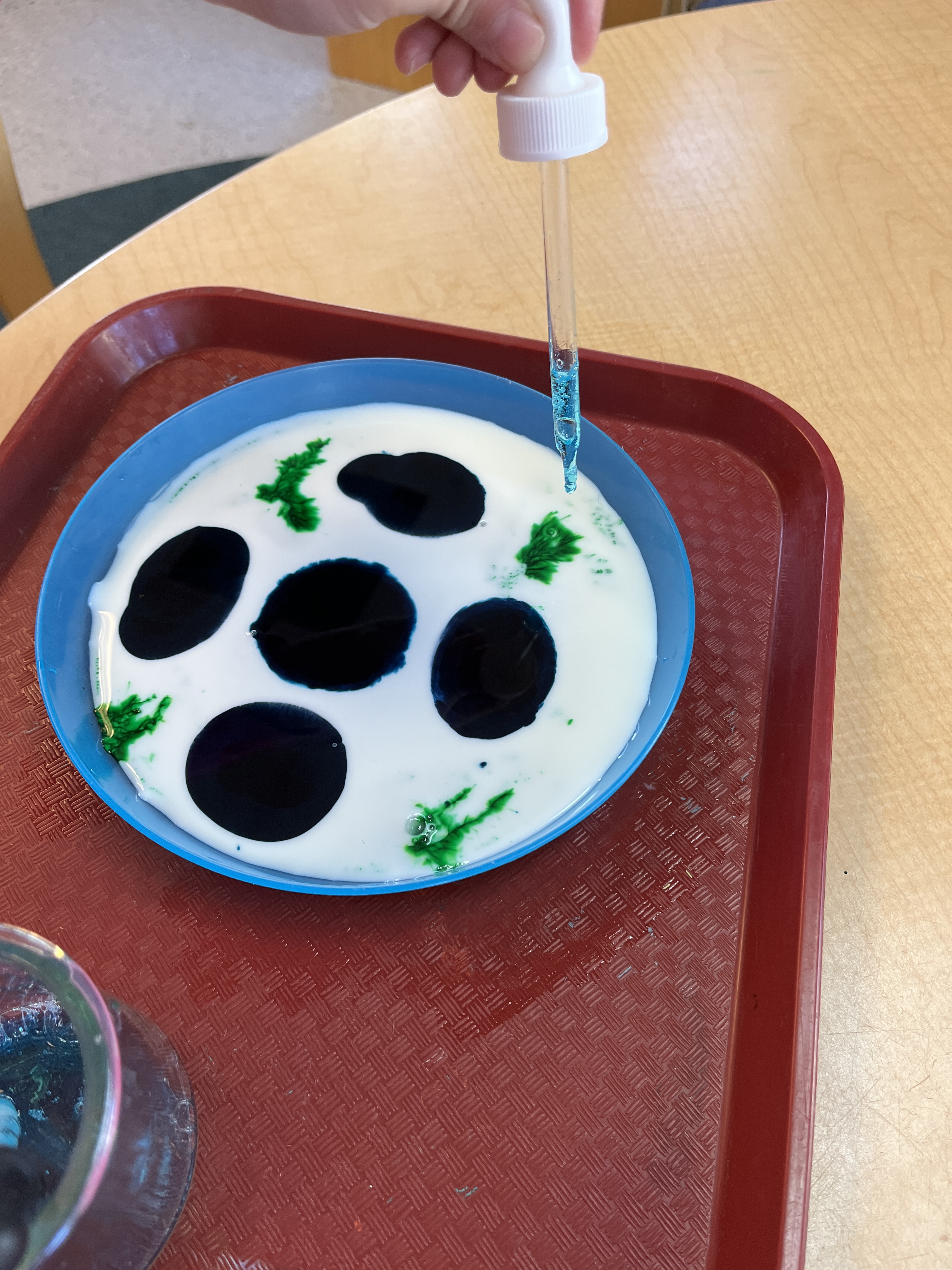
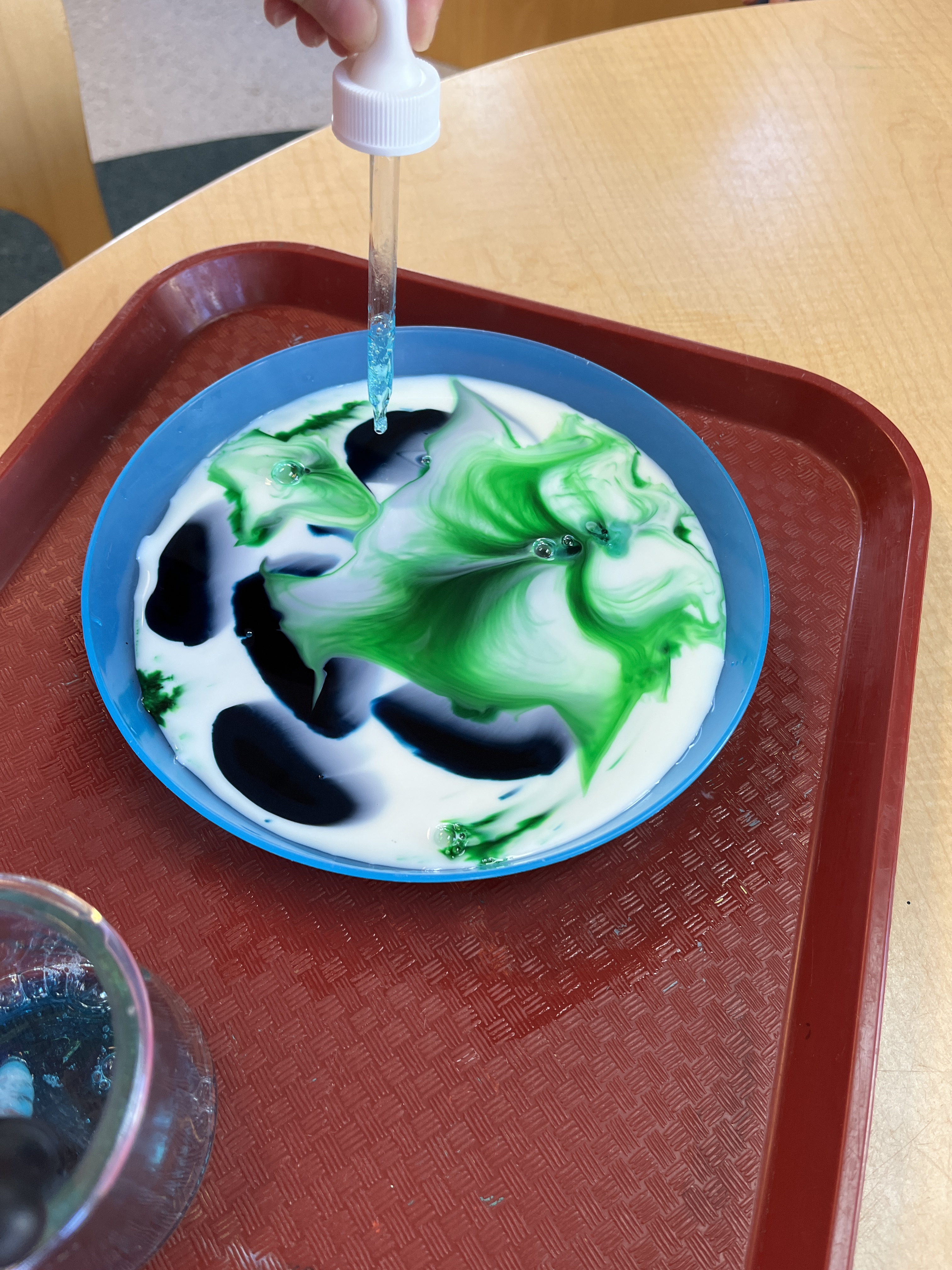
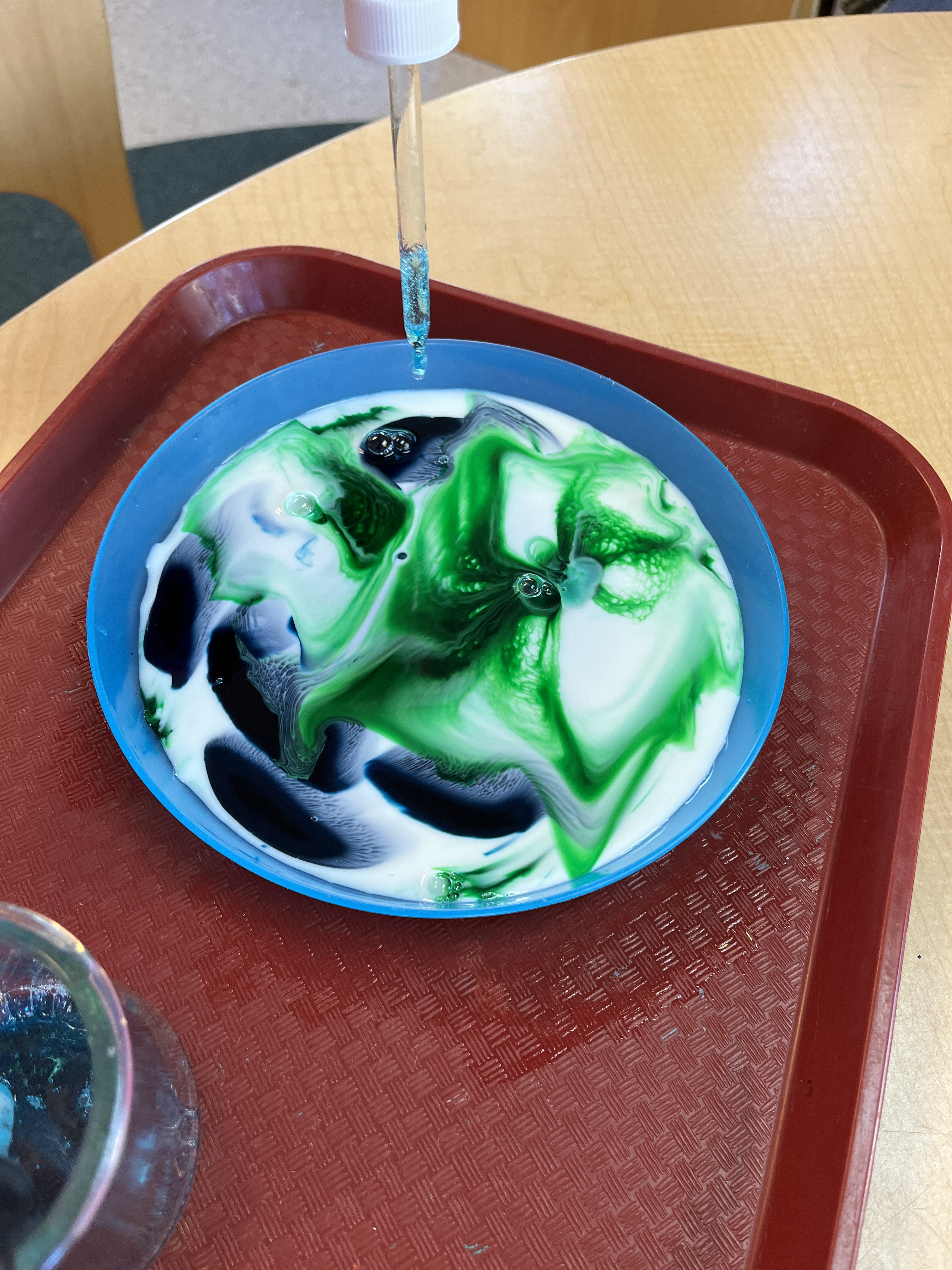
Chemistry – Mixtures. Most of this week is about process, not product. For a take home, the kids make “discovery bottles“, where they fill water bottles with water, oil, gems, and glitter. But my favorite experiment is “milk fireworks” – fill a container with a shallow layer of whole milk (you need the fat!), drip on some food coloring, then use a pipette to drip on a little bit of dish detergent, and the colors “explode.”
Chemistry – Reactions. What don’t we do at class? We don’t do “volcanoes.” (The experiment where people make clay volcanoes, then pour in baking soda and vinegar that bubbles out. We don’t do this because we don’t want kids to conflate this chemical reaction with the molten rock – magma/lava – that is actually what comes out of a volcano.) But, we do have lots of fun with baking soda and vinegar! And, of course, we launch alka-seltzer rockets!
Spring Quarter – Biology and Inventing
What is an Inventor? In our spring quarter, we study biology, and how inventors are inspired by things they find in nature. In this first week, we look at sight and sound – how we invent things to help us see better (binoculars, magnifying glasses, eyeglasses, braille), or hear better. We also play with how vibrations make sounds in musical instruments, like with this harmonica made with craft sticks, rubber bands and plastic straws.
Five Senses. We do smell tests and taste tests, walk through sensory materials, and explore optical illusions, like this thaumatrope.
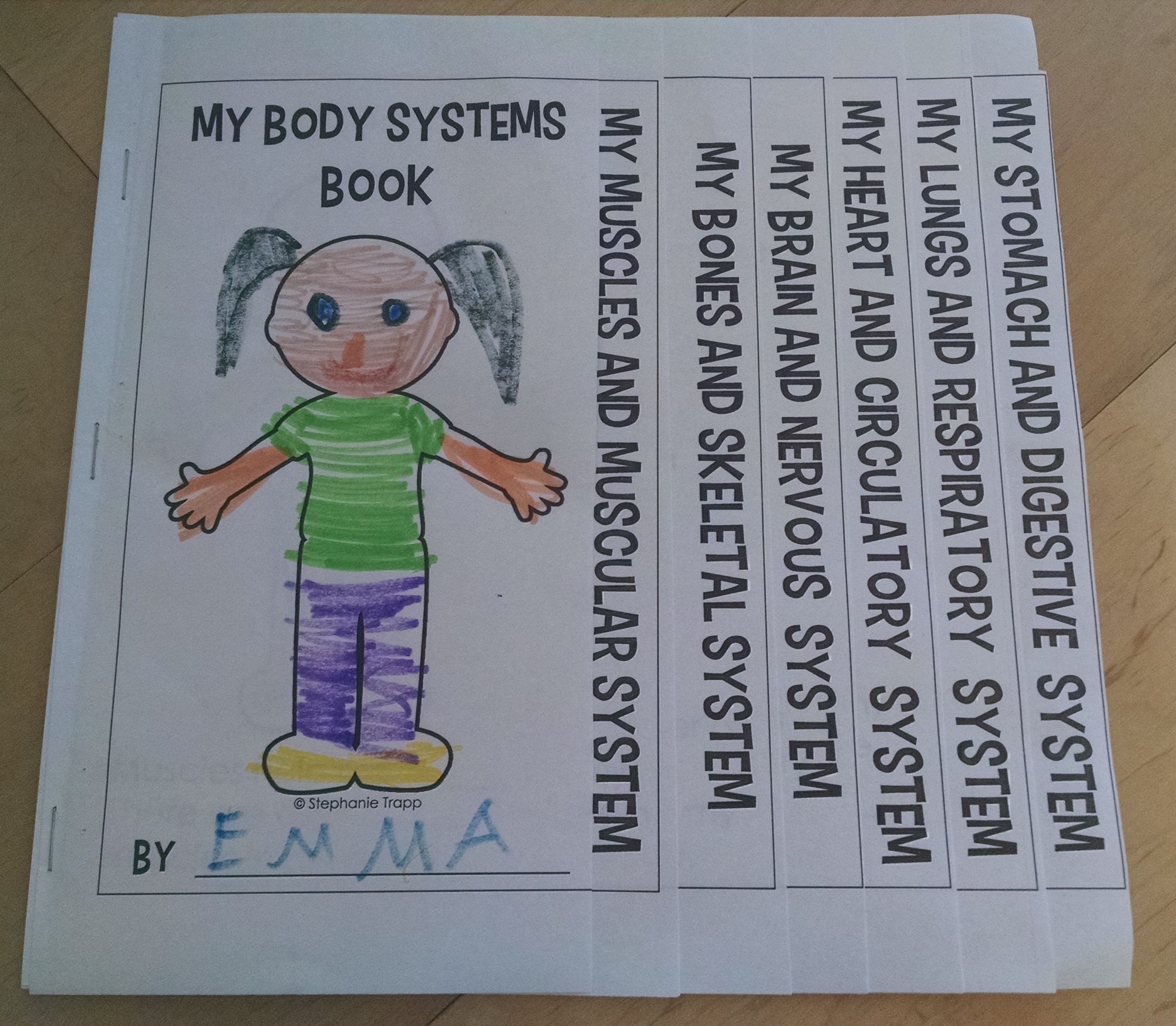
Human Body. For this class, we have a “passport” activity – the kids are given a book about all the systems of the human body, and as they try out all the different activity stations, they add answers to their books.
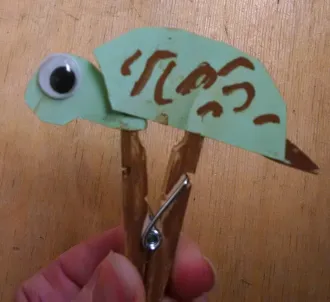
Categorizing Animals – Taxonomy. We have a fishing game, where they stand on a bridge and use magnet poles to fish for pictures of animals. Then they sort it into reptile, amphibian, bird, insect, fish or mammal. And the kids make “clothespin critters.”
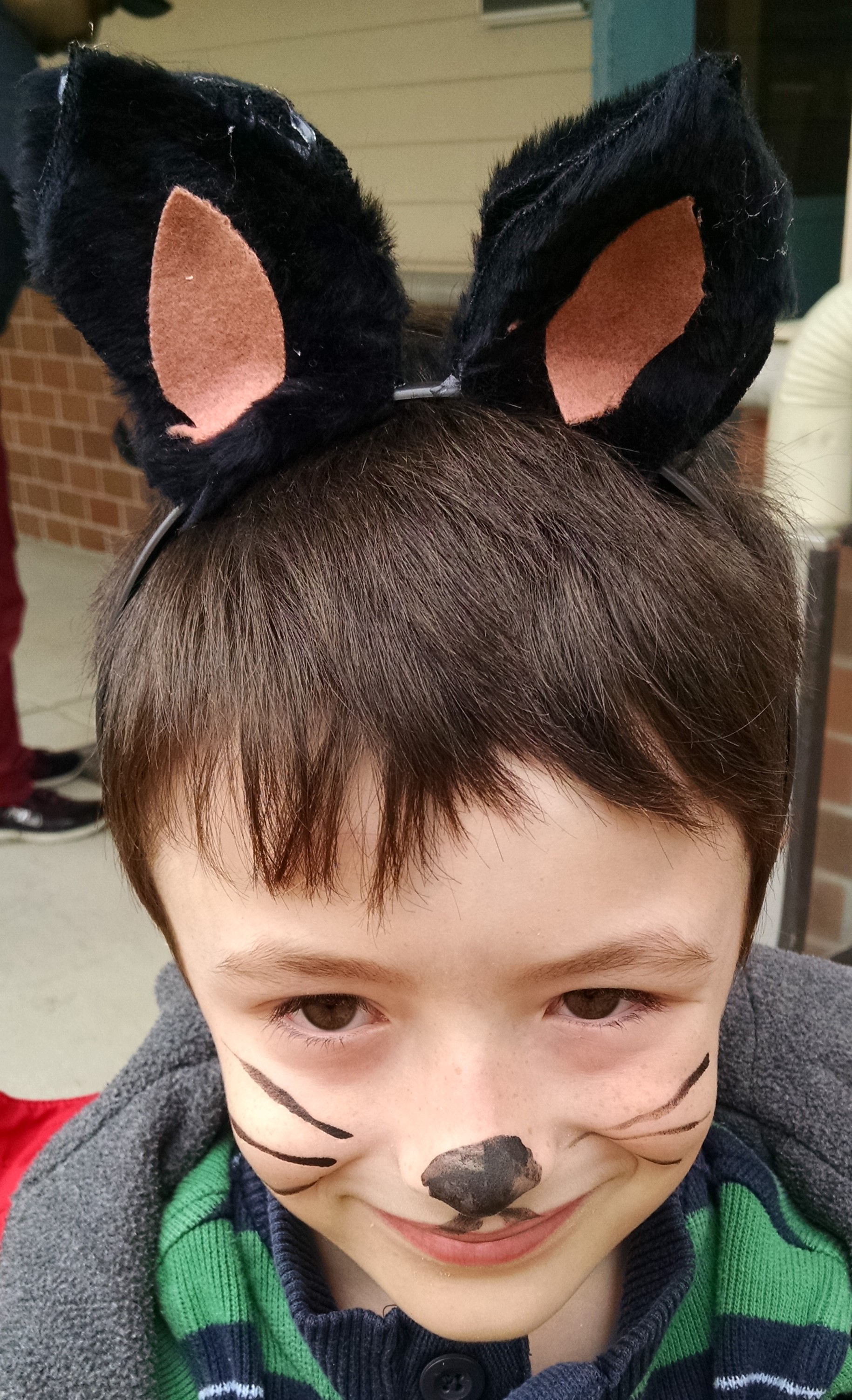
Habitat and Adaptations. As we learn how animals adapt to their different habitats, we do facepaint and make animal ear headbands.
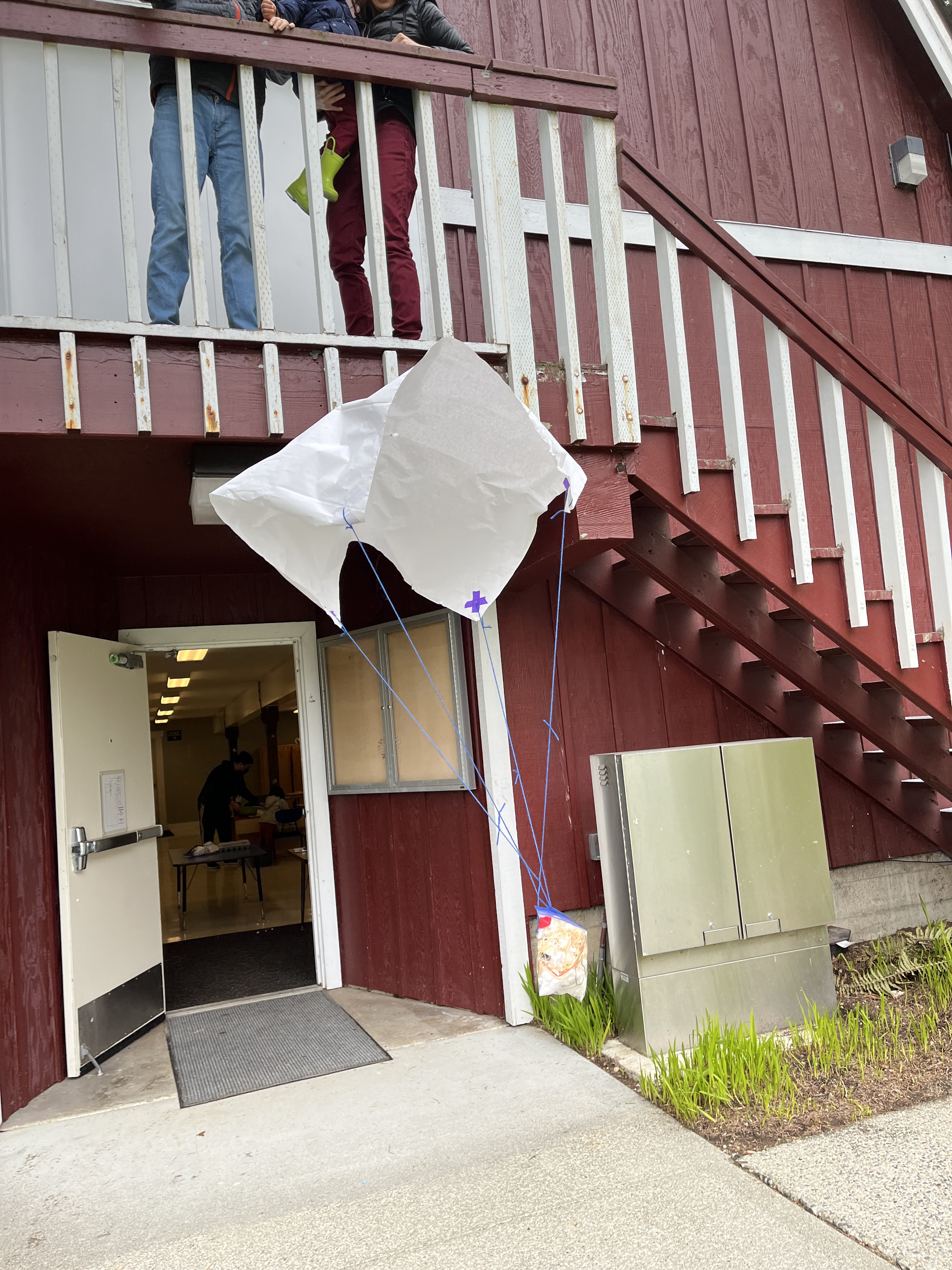
Eggs. We learn about all the different kinds of creatures that lay eggs. And we do the Egg Drop Challenge – a super fun parent-child engineering activity.
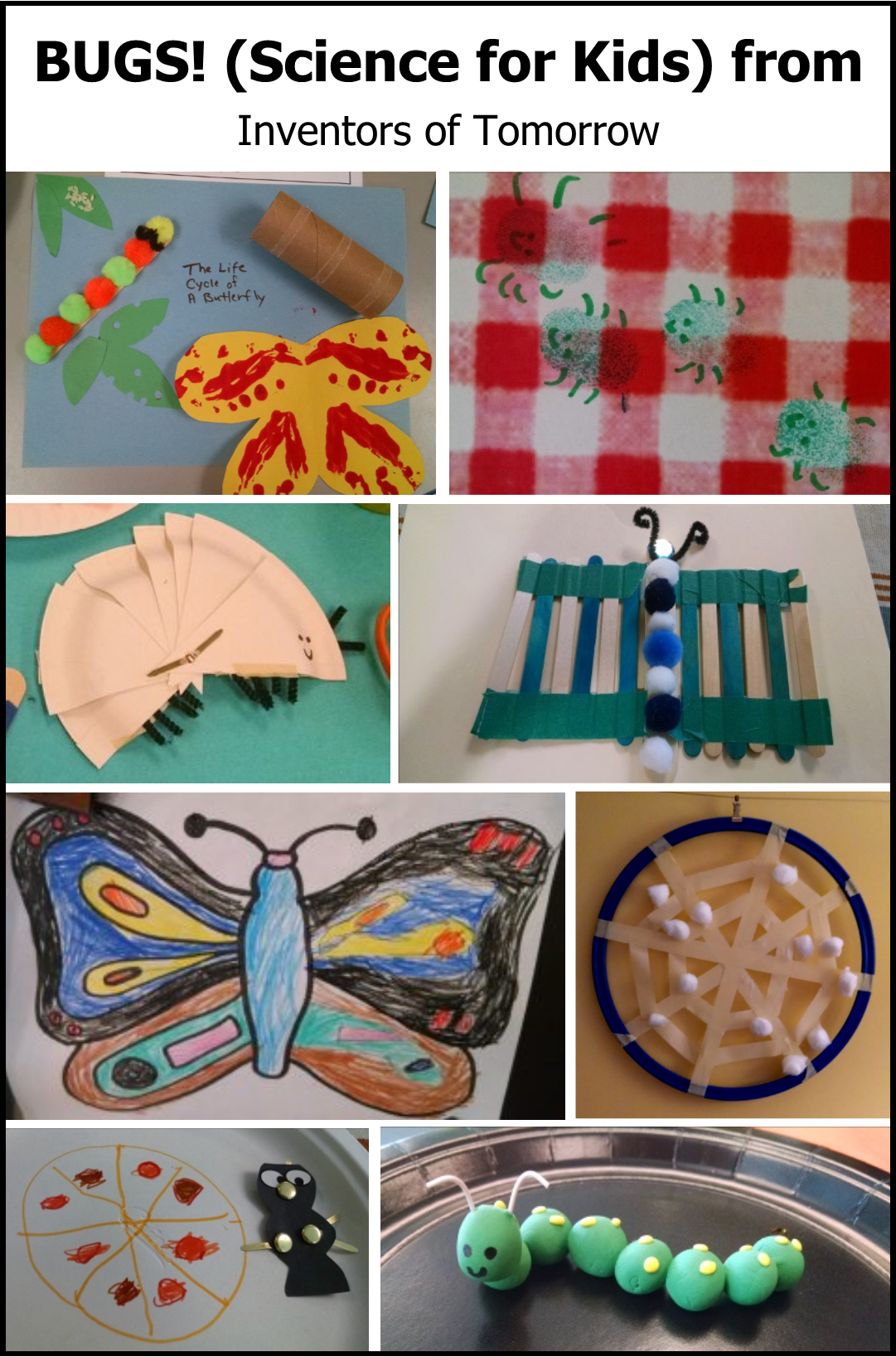
Bugs. We learn about insects, arachnids, myriapods, annelids, crustaceans, and mollusks. We make all kinds of bugs from all kinds of materials.
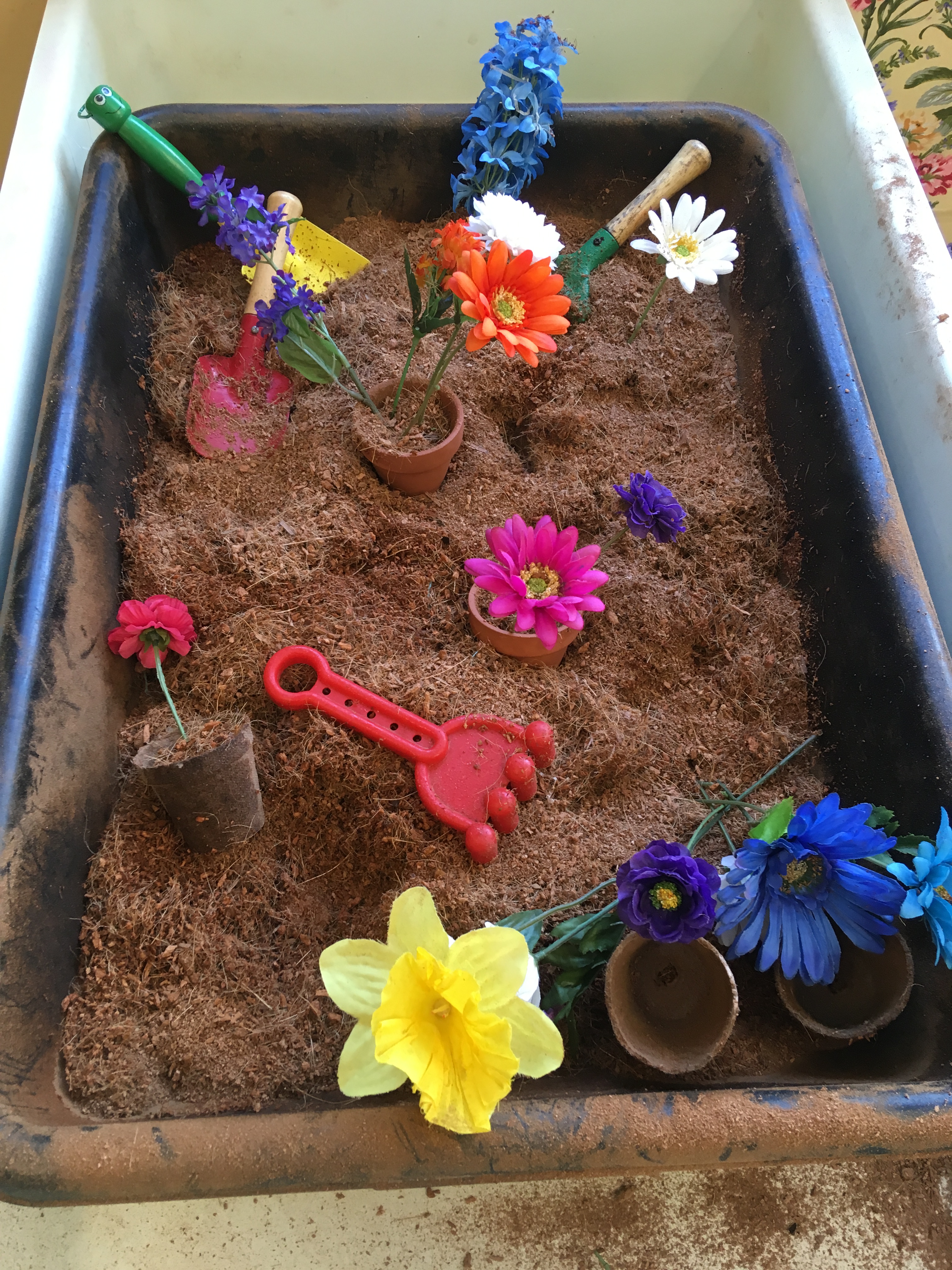
Seeds and Plants. We have different sensory bins every week of the year. On plant week, we have a play garden in the bin.
At the Beach – Sink and Float, We spend the first half of class testing out different materials to see what sinks and what floats, and learning how some shapes float better than other shapes, and then we open the “ship building factory” and try to build boats that float.
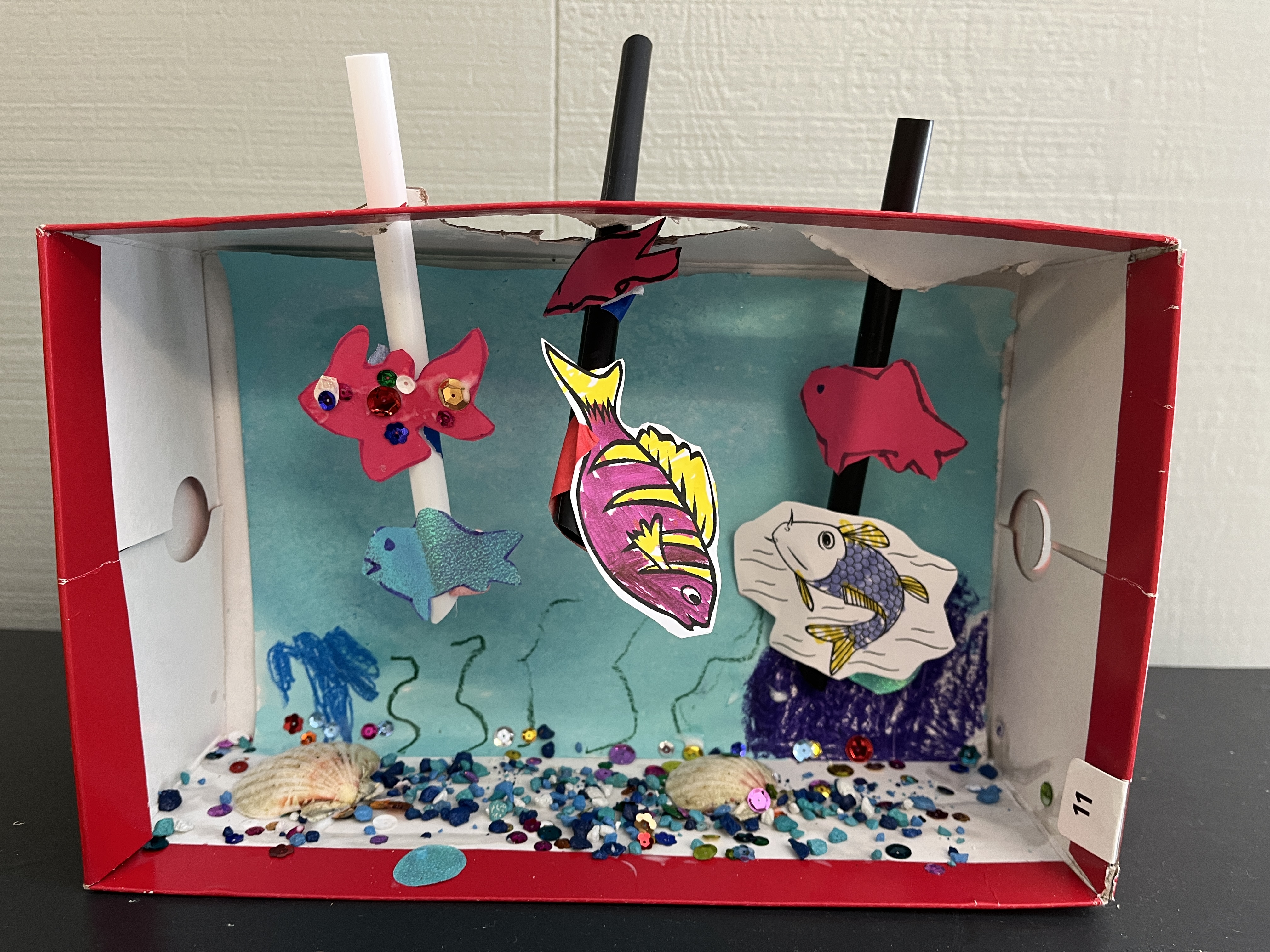
Under the Sea – Submarines and Marine Life. Our experiment is to test containers to see which ones are water-tight/air-tight and would protect a little paper person as their submarine. And the children do a multi-step project at all the tables around to the room to make an ocean diorama.
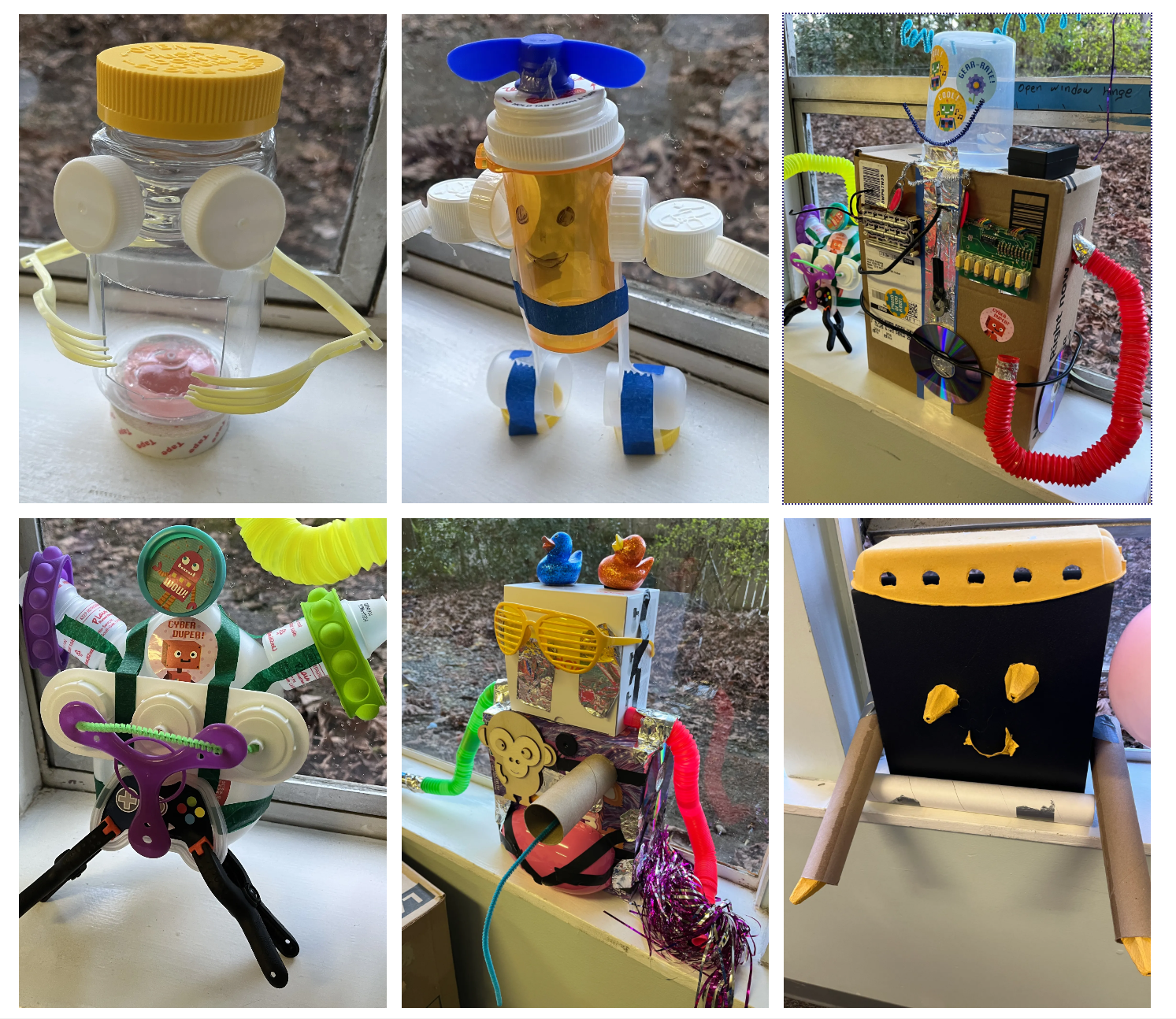
Not Biology: Robots. We learn all about how people invent robots to do jobs they can’t do or don’t want to do; and how they look to nature for inspiration. Then the kids build model robots from random materials and tell us what job their robot would do.
Final Day
Our last class of the year is Projectiles in the Park. We shoot Nerf arrows, launch stomp rockets, throw paper airplanes, play cornhole, and more. We end with launching water bottle rockets.
What is Family Inventors’ Lab
It is a parent-child class, where the parents stay and play with the kids. It is a multi-age class is for ages 3 and up. Most kids are 3 to 6, but we don’t have an upper age limit, and we’ve had kids as old as 8. Most of our older kids are repeats – they did the class in one or more previous years and loved it so much they want to keep coming. It is taught by three teachers who not only love science, they love playing, and love creativity – we teach our kids the rule “be creative not destructive.” We put out materials with some expectations of what they might do with them, and sometimes they do something delightfully unexpected!!
It’s a STE(A)M class, where every session includes
- science experiments – “what happens if…”
- technology in the form of “the tool of the week” where the kids are always learning how to use new tools, from egg beaters to oil pastels, from pulleys to hole punches
- engineering with a vast array of building toys
- art projects and art process play
- math learning, and also a monthly nature hike to learn about native plants
It is play-based, so we start the day with Discovery Time, 30 minutes of free choice exploration of the 13 – 16 different activity stations we have set up. They choose what to try, and how long to try it for. Then we have opening circle, where we introduce the day’s theme with a song, a non-fiction kids’ science book, and some demos. Then we have Tinkering Time – a chance to go back to all the activities with their new found knowledge. Then outside time. Then a closing circle to wrap up the ideas of the day, and end with a silly story – we firmly believe in building imagination side-by-side with science knowledge – that’s what builds the “inventor” mindset.
Do you want to teach a class like this? Go for it!!! If you are anywhere in the world other than King County, Washington, you can completely duplicate my curriculum anywhere. I would love to know that it’s being taught! (If you’re in King County, you’re welcome to take as many activity ideas as you want, but please don’t duplicate the class, as we’re hoping to someday, somehow, revive it in this area.)
To end this post, I want to thank my co-teachers who helped to co-create this class: Debra, Monisha, Angela, and especially Cymbric, who has been along for the whole journey. And to my husband for lots of co-creation. And all the parents and children who inspired us with their ideas and their creativity. It’s been a fabulous journey!
 Inventors of Tomorrow